Stainless Steel Shelving 304 Grade: 200kg, 300kg, 500kg Per Shelf, Boltless & Waterproof
Powder-coated steel shelving is the right answer for most warehouses. It is the wrong answer for wet ones. In cold rooms, seafood…
Powder-coated steel shelving is the right answer for most warehouses. It is the wrong answer for wet ones. In cold rooms, seafood processing, commercial kitchens, and pharmaceutical storage, moisture and washdown chemicals attack painted steel until the coating fails and the rust starts. Stainless steel shelving removes that failure mode entirely – the material itself is the corrosion protection, and there is no coating to scratch through.
This page covers the full 304-grade shelving range we produce in Luoyang: three load classes, 36 size combinations, and the construction details that matter in wet environments.
Three load classes, one frame system
| Class | Load per shelf | Typical use |
|---|---|---|
| Light duty | 200 kg | Kitchens, clinics, offices with light goods |
| Medium duty | 300 kg | Cold rooms, catering storage, general wet-area stock |
| Heavy duty | 500 kg | Food processing, chemical storage, dense carton runs |
All three classes share the same boltless keyhole frame design, so one warehouse can mix light, medium, and heavy units in the same run and re-slot levels as needs change. Material options are 201 or 304 stainless; this page focuses on 304, the grade specified where food contact, salt, or washdown chemicals are involved. For the 201 vs 304 decision, see the 201 vs 304 comparison.
Size system: 36 combinations
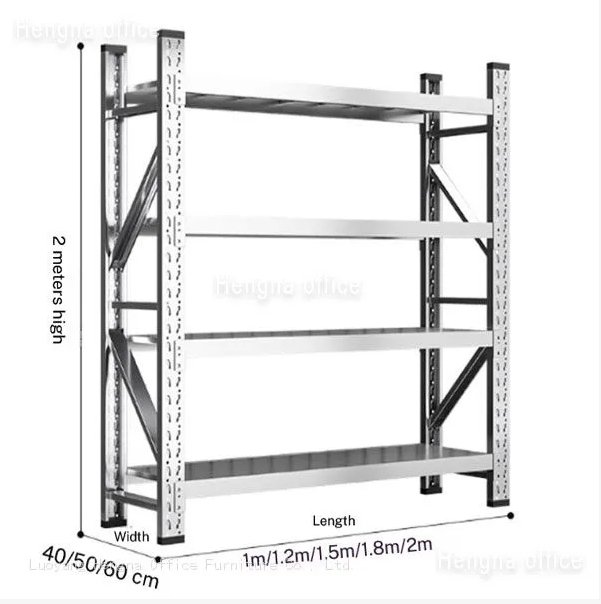
Height is fixed at 2000 mm with 4 adjustable levels. Length and depth come in three options each, in main or add-on frame form:
| Dimension | Options |
|---|---|
| Length (W) | 1200 mm / 1500 mm / 2000 mm |
| Depth (D) | 400 mm / 500 mm / 600 mm |
| Height (H) | 2000 mm fixed, 4 levels |
| Frame form | Main frame (standalone) or add-on frame (shares column, extends runs) |
That combination grid gives 36 standard sizes per material grade, covering everything from a narrow 1200 × 400 kitchen unit to a 2000 × 600 heavy duty run for a food plant. Custom dimensions are made to order on the same lines.
Construction details
- Uprights – densely punched keyhole slots; shelf heights adjust without tools
- Beams – thickened box sections with locking hooks; the lock pin prevents accidental disengagement
- Shelf panels – solid stainless sheet with pressed reinforcement ribs underneath; smooth surface cleans with a wipe, no crevices for dirt
- Diagonal braces – welded side bracing in a triangle pattern keeps tall units from racking
- Butterfly clips – the beam-to-upright lock, shaped so vibration tightens rather than loosens the joint
- Base plates – wide welded foot plates with bolt holes for floor anchoring, plus anti-slip plastic pads
Why stainless beats coated steel in wet rooms
- No coating to fail. Powder coating protects until a forklift scratches it; after that, rust starts under the paint and spreads invisibly. Stainless has no coating layer to breach
- Washdown ready. 304 handles water, mild acids, and standard cleaning agents without corrosion or surface pitting
- Hygiene surface. Solid smooth panels leave no dirt traps, which matters in food and pharma audits
- Longer service life. In a cold room or seafood plant, a stainless rack outlives a painted rack several times over, which changes the total cost math
Related wet-environment systems already covered on this site: 304 cold room shelving 500kg, walk-in cooler stainless shelving, stainless kitchen shelving 400kg, and lab grade 304 chemical resistant shelving.
Where this shelving is specified
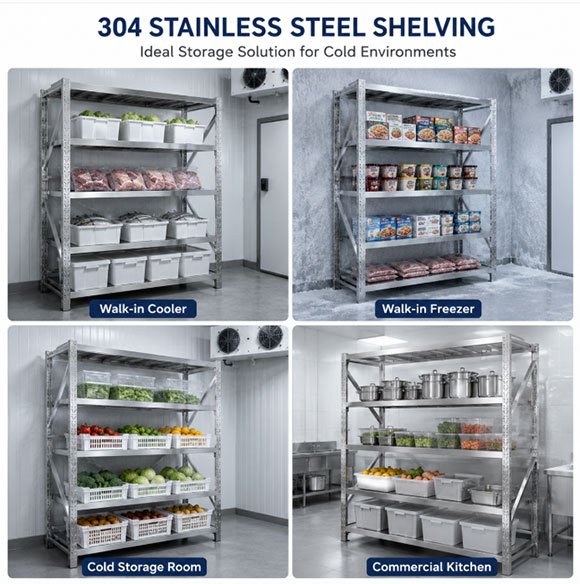
- Commercial kitchens and restaurants – ingredient staging, pot and pan storage, dish areas
- Cold rooms and freezers – condensation and low temperatures break painted shelving quickly
- Seafood and meat processing – salt water, blood washdown, daily cleaning chemicals
- Pharmaceutical and lab storage – clean surfaces, chemical resistance, no flaking coating into stored materials
- Beverage plants – syrup spills, bottle washing areas, humid filling lines
- Outdoor and marine sites – coastal salt air where galvanized steel still corrodes over time
Surface finish: brushed or bright
Stainless shelving ships in two surface finishes. Brushed (satin) hides fingerprints and small scratches, which is why kitchens and front-of-house storage choose it. Bright (mirror) finish wipes clean the easiest and looks sharper in display areas, but shows handling marks more readily. Both finishes perform identically on corrosion resistance – the choice is appearance and cleaning habit, not durability.
201 vs 304: a working rule
Both grades look identical, so price is not a quality signal by itself. The practical difference is where they live:
- 201 grade – dry, light-duty environments: offices, retail stockrooms, indoor storage where humidity is controlled. Lower nickel content keeps cost down
- 304 grade – wet, salty, or washdown environments: cold rooms, seafood and meat plants, commercial kitchens, coastal sites. The higher nickel content is what resists pitting when chlorides are around
If the rack lives anywhere that gets hosed down, specify 304. The cost difference buys years of service life in those conditions.
Custom sizes and OEM orders
The standard grid covers most projects, and the production lines are not limited to it. Non-standard lengths up to 2400 mm, deeper units, extra levels, and special reinforcements for point loads all run to order. For distributors and brand owners, OEM packaging, private-label plates, and custom hole patterns are available on container quantities. Drawings are confirmed before production, and the test assembly report ships with every order.
Load class selection for wet rooms
Wet environments add one consideration to the load decision: corrosion allowance. A rack that carries 250 kg per shelf in a dry warehouse runs the same load in a cold room, but the condensation, washdown cycles, and chemical exposure mean you want reserve in the structure. The working rule we give buyers:
- Light goods under 150 kg per shelf – 200 kg class is fine
- Regular wet-room stock around 250 kg – step to 300 kg class
- Dense cartons, drums, or anything near 400 kg – the 500 kg class, so the structure stays true as the environment works on it
FAQ
What is the difference between 201 and 304 stainless shelving?
304 carries more chromium and nickel, which gives it clearly better corrosion resistance, especially against salt and cleaning chemicals. 201 costs less and suits light indoor duty. Details in the grade comparison.
How do I clean stainless steel shelving?
Wipe with a mild detergent and water; rinse and dry. Avoid chlorine-heavy cleaners on 201 grade; 304 tolerates standard washdown chemicals.
Can I mix main and add-on frames?
Yes. Main frames stand alone; add-on frames share the neighboring column and extend the run. Mix both to use wall and aisle space efficiently.
What sizes are in stock?
The 36 standard size combinations ship on short lead time; non-standard lengths and depths are produced to order. Confirm availability per SKU with your quote.
How is stainless shelving packed for shipping?
Multi-layer protection: bubble wrap on finished surfaces, plastic corner guards, carton outer, and strapped bundles. Uprights and panels pack flat for container loading.
Can I get custom sizes and OEM branding?
Yes. Non-standard lengths, depths, and shelf counts run on the same production lines, and OEM packaging or branding is available for container orders.
Does stainless shelving need floor anchoring?
Tall units over 2000 mm or racks in traffic areas should anchor through the base plate holes. The wide welded foot plates already spread the load; bolting them down removes any tipping risk when forklifts work close.
Why stainless runs on its own line
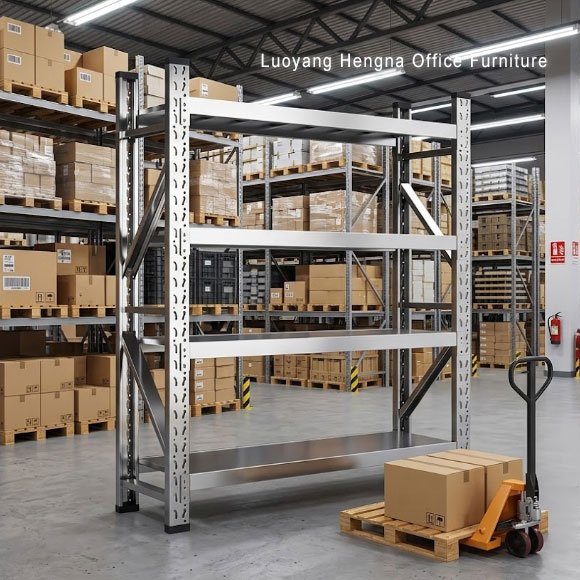
Carbon steel dust on a stainless surface becomes rust spots after the customer unloads – small ones at first, then warranty claims. So stainless frames run on separate equipment from the coated steel range, and the finished units move through dedicated packing with film on every exposed surface. The same keyhole design carries across both lines, which keeps spare parts and add-on frames interchangeable; what changes is the discipline. In a food plant audit, the difference between a clean line and a shared line is the difference between passing and explaining.
Send your sizes, load class, and material grade via the contact page for a factory quote.