201 vs 304 Stainless Steel Shelving — Which Grade Holds Up in Wet, Humid, and Washdown Areas
The phone call we get all the time A food processing manager called last week. He had budget for 201 stainless shelves….
The phone call we get all the time
A food processing manager called last week. He had budget for 201 stainless shelves. His production supervisor was adamant — 201 won’t survive the daily washdowns. He was stuck.
We’ve answered this question fifty times. Here’s the short version: for a dry warehouse, 201 is fine. For any environment with moisture — washdown areas, cold rooms, anywhere chemicals touch the rack — 304 is the right call.
The real difference between 201 and 304
Stainless steel resists rust because of two elements: chromium and nickel. Chromium forms a protective oxide layer on the surface. That’s what keeps it from rusting in dry conditions.
Nickel handles corrosion. This is where 201 and 304 part ways. 304 has roughly double the nickel content of 201. More nickel means the steel withstands acids, alkalis, and chlorides without degrading.
Here’s what that means in practice. Take a 201 stainless rack in a wet processing area. After two years, look closely at the shelf edges, the clip slots, anywhere water tends to sit. You’ll see tiny black dots — pinhead-sized. That’s pitting corrosion. From the surface it looks like a speck. Underneath, the steel has started eating itself from the inside out.
304 doesn’t pit. The nickel content stops the process before it starts.
Then there’s the sanitizer factor. Food plants, labs, and pharma facilities use aggressive cleaners — sodium hypochlorite, peracetic acid, quats. On 201 stainless, these chemicals dull the surface over weeks and create corrosion spots over months. 304 handles them without issue.
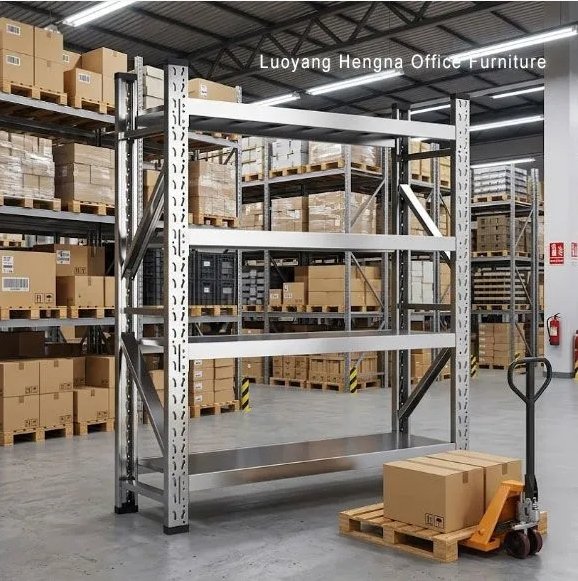
Which grade for which environment
Dry warehouse, spare parts room, archive storage: 201. No moisture, nothing corrosive. 201 will look good and hold up for five years or more. The cost savings are real.
Humid warehouse, basement storage, coastal area: 304. Constant humidity slowly oxidizes 201. You won’t see rust, but the surface turns dull. 304 stays bright.
Cold rooms and cold chain facilities: 304. Cold room shelving cycles between sub-zero and ambient temperatures all day. Condensation never stops. 201 in this environment starts pitting within a year.
Washdown production lines: 304. Seafood processing, meat processing, commercial kitchens, dairy plants — anywhere a pressure washer hits the rack daily, 201 fails in two years. 304 handles it.
Chemical sanitizer environments: 304. Pharma GMP, food testing labs, cleanrooms. Sanitizers on 201 dull the surface in months and create spots within a year. 304 doesn’t react.
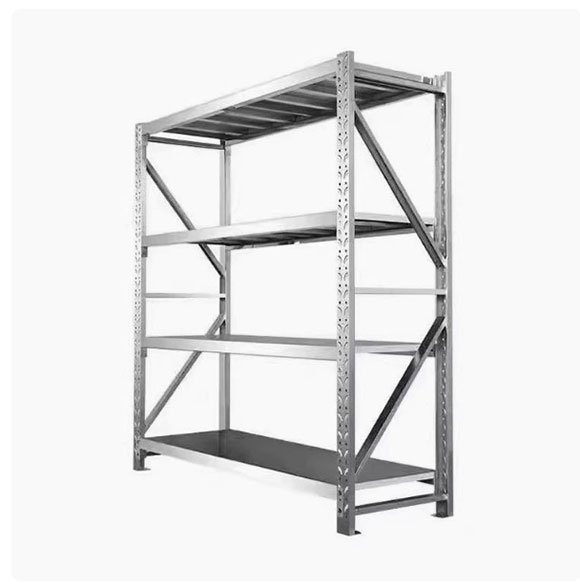
201 vs 304 Stainless Steel Shelving At a glance
| 201 Stainless | 304 Stainless | |
|---|---|---|
| Dry conditions | Works | Overkill, but works |
| Humidity + condensation | Pits in 1-2 years | No issue |
| Pressure washdowns | Pits, edge corrosion | Survives |
| Chemical sanitizers | Dulls, spots after months | Stable |
| Where to use it | Dry storage, infrequent contact | Cold rooms, washdown lines, GMP |
| Typical lifespan | 5+ years dry / 2 years wet | 5+ years wet |
| Upfront cost | Lower | Higher |
The cost math people miss
Yes, 201 shelving costs less per unit. If your facility has no moisture, buy 201. But if you’re running a washdown line and you buy 201 to save money, you’ll be replacing those racks in two years. The labor to swap them out, the downtime, the reorder hassle — it often costs more than just buying 304 the first time.
A seafood plant maintenance supervisor once told us: “Half a day of downtime to replace racks costs more than the racks themselves.” He’s not wrong.
Can you mix 201 and 304?
Yes. If your plant has a wet processing line and a dry storage warehouse, use 304 on the line and 201 in the warehouse. They’re visually identical. Nobody walking through the facility can tell the difference.
FAQ
Q: Does 201 or 304 affect load capacity?
No. The grade number tells you corrosion resistance, not strength. Load capacity comes from the rack’s structure and configuration. A 201 and 304 rack of the same spec hold the same weight.
Q: What about the butterfly clips — do 201 clips rust?
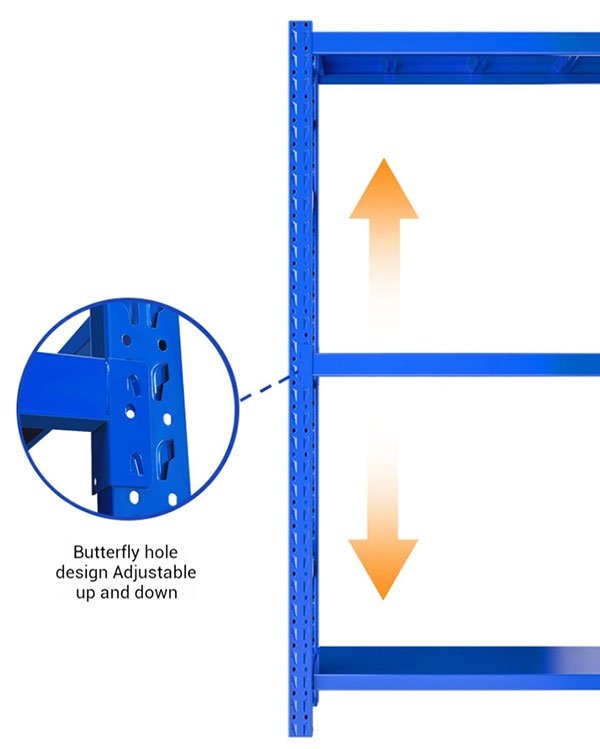
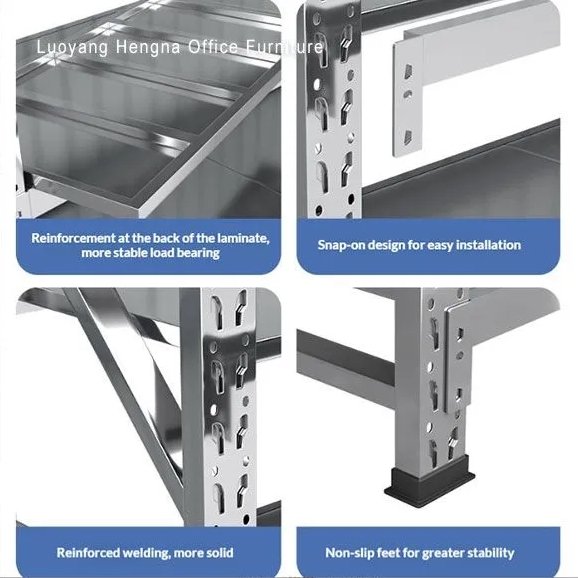
Clips are the same grade as the rack. 304 clips won’t rust in any condition. 201 clips are fine in dry storage but may show minor pitting in wet areas over time.
Q: How do I know if my environment needs 304?
If you wash the racks with water more than once a week, or if you use chemical cleaners of any kind, go 304. If you’re not sure, send us photos of your facility and we’ll advise.
Q: What’s the MOQ?
Standard sizes start at a few dozen units. For a first order, a sample lets you check the build before committing.
Q: Packaging for export?
Moisture film wrap, corner protectors, KD flat-packed. Arrives dry and undamaged.
Q: OEM options?
Silk-screen logo, custom dimensions, custom packaging. We’ve done export, we handle the details.
Q: Warranty?
One year.
Q: Quote turnaround?
24 hours.
Bottom line
The 201 vs 304 decision isn’t complicated. Dry = 201. Wet = 304. If you’re on the fence, describe your facility conditions to us and we’ll tell you which one fits. Quote in 24 hours.