Drive-in Racking Cost vs Selective Racking — Where High-Density Storage Pays Back Fastest
When a warehouse runs low on floor space, the fastest way to add capacity is not always a new building — it…
When a warehouse runs low on floor space, the fastest way to add capacity is not always a new building — it is a higher-density racking layout. But density comes with trade-offs, and the most common decision a storage manager faces is whether deep-lane drive-in racking is worth it compared with a selective system.
This guide breaks down the drive-in racking cost vs selective racking decision in plain terms: how the numbers per pallet position compare, where drive-in saves the most, and when a selective layout is the smarter call.
What drive-in racking does differently
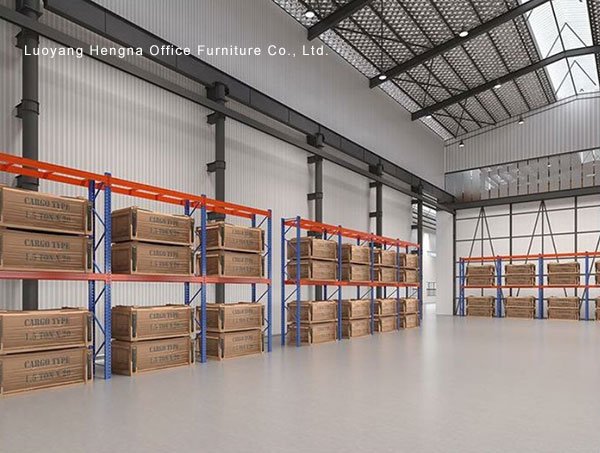
Selective racking gives every pallet its own access point — a forklift can reach any pallet directly. Drive-in racking removes the aisle between rows and stores pallets in deep lanes, several deep and several levels high, all reached from a single entry. The forklift drives into the lane to put away or retrieve a pallet, which is why the system follows a last-in, first-out (LIFO) flow.
Because drive-in eliminates aisles, it packs more pallets into the same footprint. For operators storing large volumes of a limited number of SKUs, this higher density is the whole point.
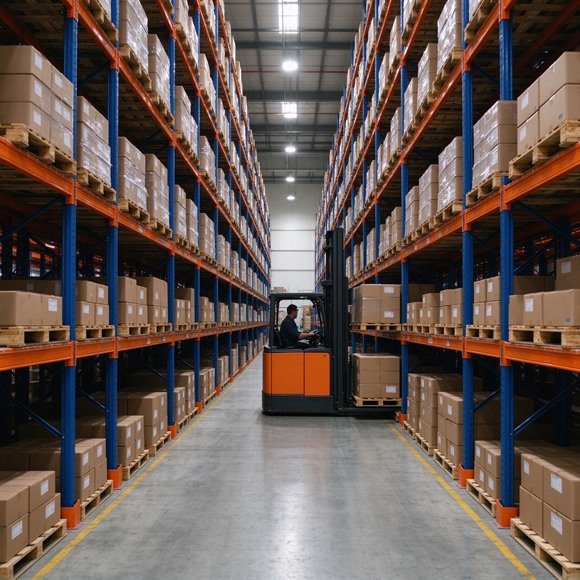
Drive-in vs selective: cost per pallet position
The headline comparison is usually cost per pallet position. Drive-in racking uses fewer upright frames and beams than selective because adjacent pallets share structure and aisles disappear. The result is that, for the same building footprint, a drive-in system typically delivers a lower cost per pallet position — the exact figure depends on lane depth, height, and pallet dimensions, so it should be confirmed in a project quotation.
| Comparison | Drive-in racking | Selective racking |
|---|---|---|
| Pallet access | LIFO, deep lanes, one entry per lane | Direct access to every pallet |
| Floor-space density | High — aisles removed between rows | Lower — access aisle needed for every row |
| Cost per pallet position | Usually lower on high-volume SKUs | Higher per position, more flexible |
| SKU fit | Fewer SKUs, high volume each | Mixed SKUs, frequent picking |
| Forklift work | Drives into lanes, putaway and picking slower | Direct handling, faster per move |
Where drive-in saves the most
Drive-in racking pays back fastest in three situations:
- Cold storage — every cubic meter you do not have to cool is money. Higher density in a freezer or chill room means a smaller cooled volume for the same pallet count, which cuts ongoing cooling costs year after year.
- High-volume, low-SKU products — palletized goods in a few product families, stored in bulk, suit deep lanes perfectly.
- Expensive floor space — when rent or construction cost per square meter is high, packing more pallets into the footprint drives fast payback.
Many cold-storage operators choose drive-in precisely because the energy saving compounds: the density gain is paid for once, while the cooling saving repeats on every electricity bill.
When selective racking wins
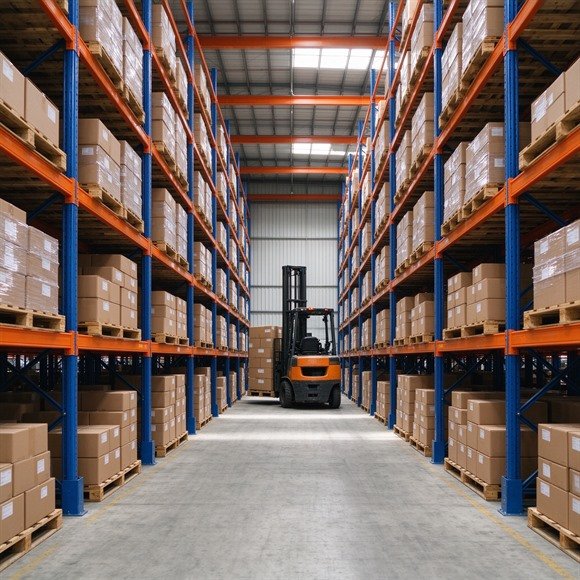
Selective racking remains the right choice when your operation needs flexibility. If you pick a wide mix of SKUs, rotate stock on a first-in, first-out (FIFO) basis, or handle frequent returns, direct access to every pallet usually outweighs the density saving. LIFO flow is the main limitation of drive-in: if your product must be picked in arrival order, deep-lane LIFO storage will not work.
In practice, many warehouses run a hybrid — selective bays for fast-moving or mixed SKUs, and drive-in lanes for the bulk volume of a few stable products. This gets density where it pays while keeping flexibility where picking demands it.
Planning a drive-in project
If drive-in looks like the fit, settle these points before ordering:
- Lane depth and height — depth affects both density and how far a forklift must travel; height is limited by building clearance and fork reach.
- Forklift type — drive-in lanes need reach trucks or a defined fork entry; confirm the lane clearances for your equipment.
- SKU discipline — assign each lane to one SKU family so LIFO flow does not create buried, hard-to-reach stock.
- Safety and floor rails — floor guides and rail protection keep forks aligned and reduce impact on the frames.
- Payback model — estimate the density gain, the floor space saved, and, for cold storage, the annual cooling saving.
Estimating the payback
To estimate payback simply, start with your current pallet count and floor area, then model the density gain from removing aisles. Multiply the pallets gained by your cost per pallet position, and add, for cold storage, the annual saving from cooling a smaller volume. Divide the installed cost by the annual saving to see how many years the system takes to pay back. In most high-density cold-storage projects the figure comes in well under the life of the rack, which is why the layout is worth modelling before you build.
Common mistakes to avoid
Three errors show up on drive-in projects. First, operators assign mixed SKUs to one deep lane, then cannot reach the bottom pallets without unpacking the whole lane — keep one SKU family per lane. Second, they size the lane for a standard pallet but forget fork clearance, so truck entry scrapes the rails. Third, they skip floor guides in a freezer where visibility is poor, raising frame damage. Plan SKU discipline, fork clearance, and floor rails up front, and the density gain turns into real savings instead of repair bills.
Why buy from Luoyang Hengna
Luoyang Hengna Office is a steel furniture manufacturer in the Pangcun steel furniture industrial zone, Henan, China. We build drive-in and selective racking factory-direct, and we can size a layout to your building and pallet profile. Export orders ship in knock-down form with protective packaging, and pricing is confirmed per project with a 24-hour quotation response.
Frequently asked questions
Is drive-in racking cheaper than selective racking?
On a per-pallet-position basis, drive-in is often cheaper for high-volume, low-SKU storage because it removes aisles and shares structure. The figure depends on lane depth and height and should be confirmed in a quotation.
Does drive-in racking work in cold storage?
Yes. High-density drive-in racking is common in freezers and chill rooms because it reduces the cooled volume needed for the same pallet count, which cuts ongoing cooling costs.
What is the main downside of drive-in racking?
LIFO flow. Pallets must be retrieved in reverse of the order they were stored, so it does not suit FIFO rotation or high-frequency mixed picking.
Can I combine drive-in and selective racking in one warehouse?
Yes. Many operators run a hybrid layout — selective bays for mixed or fast-moving SKUs and drive-in lanes for bulk, low-variety volume.
What equipment do I need for drive-in lanes?
Typically reach trucks or forklifts with forks sized for the lane. Confirm lane clearances and floor rail requirements for your equipment before ordering.
Get a quote within 24 hours
If you are weighing drive-in against selective racking for a new or expanded layout, contact Luoyang Hengna for a quotation. We respond within 24 hours with a cost comparison, lead time, and shipping options based on your building and pallet profile.