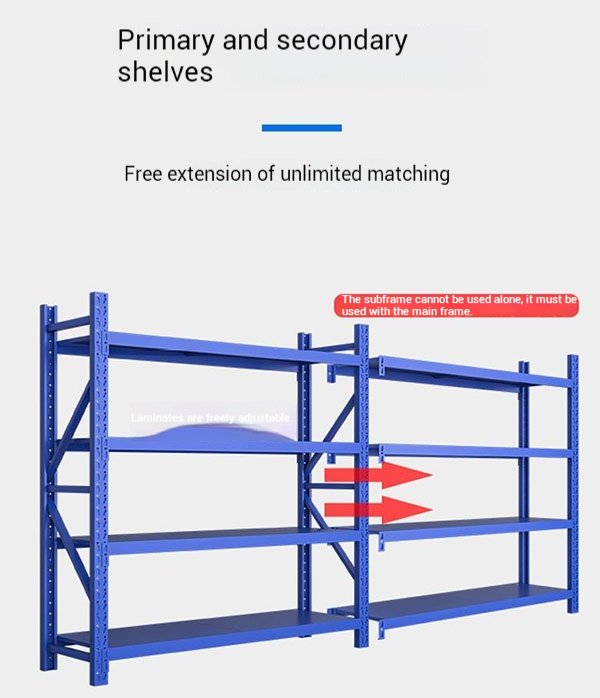
Heavy Duty Pallet Racking 2500kg Per Level Adjustable Beam Warehouse Storage — KD Boltless Assembly No Welding Needed
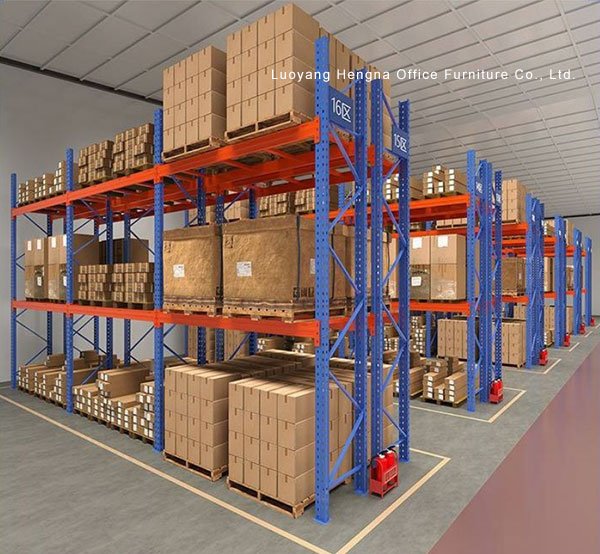
Steel racking for palletized goods. Forklift loads straight in and out, one SKU per level, no digging through stacks. Four parts: upright…
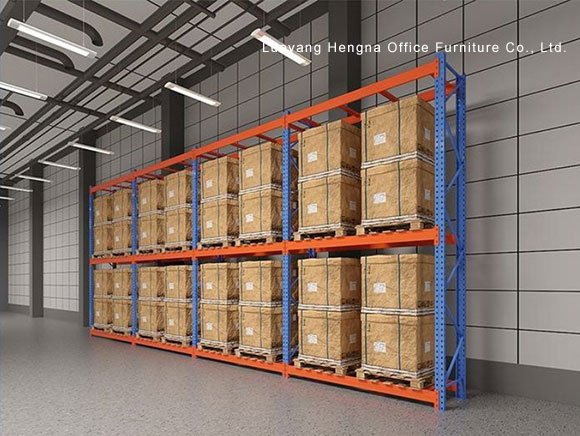
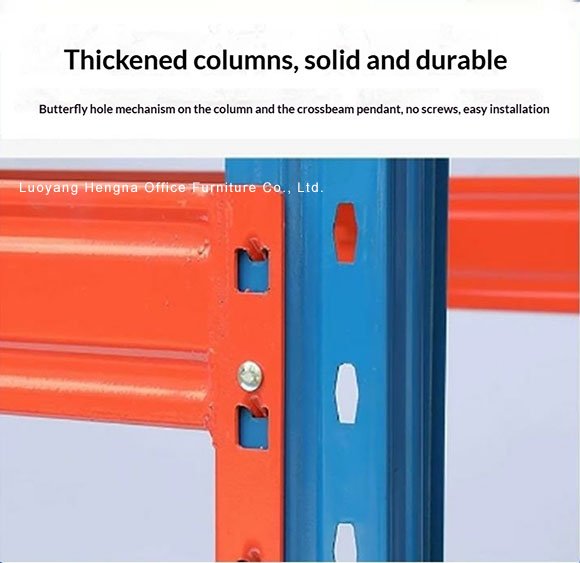
Steel racking for palletized goods. Forklift loads straight in and out, one SKU per level, no digging through stacks.
Four parts: upright frames + beams + safety pins + beam connectors. Ships flat-packed. Assemble on site — no welding, no riveting, two people knock out a four-level rack in half a day.
Heavy Duty Pallet Racking 2500kg Per Level Specs at a Glance
| Item | Detail |
|---|---|
| Rated load per level | 2500kg (upgradeable to 3000/4000/5000kg) |
| Upright material | Cold-rolled profiled steel, diamond-punched holes |
| Upright section | 80×60×2.0mm C-channel (standard), thickened for higher loads |
| Beam material | Roll-formed box beam / P-type closed beam |
| Beam section | 100×50×1.5mm or 120×50×1.8mm (selected by load) |
| Surface finish | Electrostatic powder coating, salt spray test ≥48h |
| Coating thickness | 60-80μm |
| Level adjustment | Diamond hole pitch, 75mm increments |
| Assembly method | Clip-on, safety pin lock, no welding |
| Packaging | KD flat-pack, fits 20ft/40ft containers |
| Customization | Upright height / beam length / number of levels per order |
| Optional add-ons | Steel decking panels, particle board decking, forklift entry guides, row spacers, back-to-back connectors |
| Warranty | 1 year on structural components |
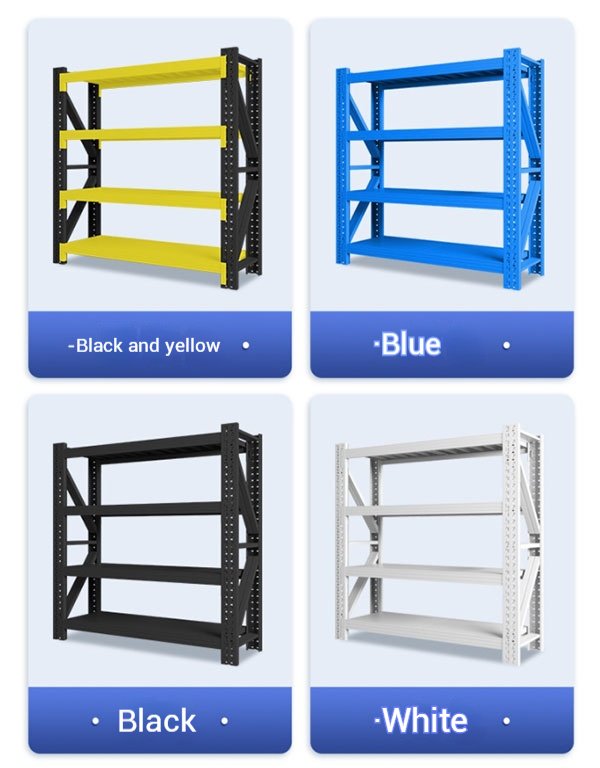
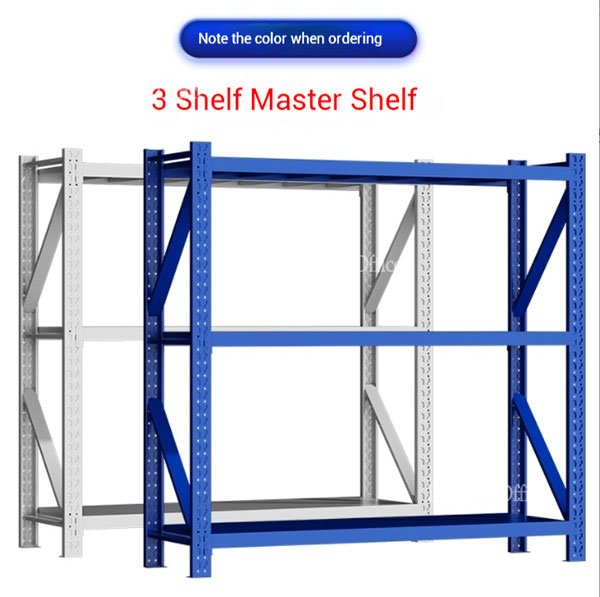
| Color | Standard: blue uprights + orange beams, custom colors available |
Structural Details — What’s Inside the Frame
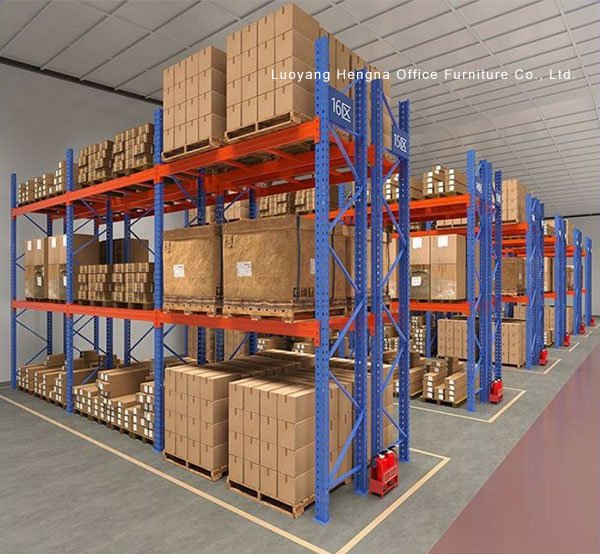
The upright is an 80×60mm C-channel cold-rolled from Q235 steel. The open side faces inward, the flat back faces the aisle. Diamond-shaped holes are punched down both faces at 75mm pitch — that’s where beams slot in. No drilling on site, no measuring, no guessing.
The beam is a roll-formed box section, not a folded sheet. A folded C-channel can warp under point load. A closed box beam distributes weight across the entire cross-section — two pallets sitting on the same beam won’t tilt toward each other.
Beam connectors are stamped steel with a three-prong claw. When you drop a beam into the upright, the claw grabs three contact points on the diamond hole: top edge, side edge, and bottom edge. Then the safety pin goes in from the side, locking the claw in place. Even if a forklift bumps the beam from below, the pin holds. The connector won’t walk out.
Powder coating isn’t just cosmetic. The uprights go through a phosphating wash first — that’s a chemical bath that etches the steel surface at the microscopic level, so powder sticks to steel instead of sitting on top. Then electrostatic spray applies a 60-80μm layer. Then the rack goes through a curing oven at 180-200°C. The result: a coating that flexes with the steel instead of cracking off. In a dry indoor warehouse, you’re looking at 7-8 years before any visible rust. If your warehouse is coastal or chemically active, tell us upfront — we can quote stainless steel or a heavier zinc-rich primer underneath the powder coat.
Welded Racking vs This One
| KD Boltless (This One) | Traditional Welded Racking | |
|---|---|---|
| Assembly | Clip + safety pin, two people | Welder + welding machine required |
| Skill needed | None — follow the guide | Certified welder |
| Relocation | Disassemble, 95% parts reused | Cut welds, uprights and beams scrapped, reuse rate under 30% |
| Level adjustment | Move beam to different hole, 5 minutes | Welded in place — change means re-welding |
| Shipping volume | Flat-packed, 40-60 sets per 20ft container | Pre-welded, double the volume, freight doubles with it |
| Delivery damage risk | Steel packed flat, edges protected in wooden crates | Welded frames shift during transit, welds can crack at sea |
| Best for | Frequent warehouse moves, rented space, seasonal layout changes | Permanent warehouse, never moving |
If your lease runs three years, welded racking is a write-off every time you move. Boltless goes with you — three moves, still usable.
Where It Works
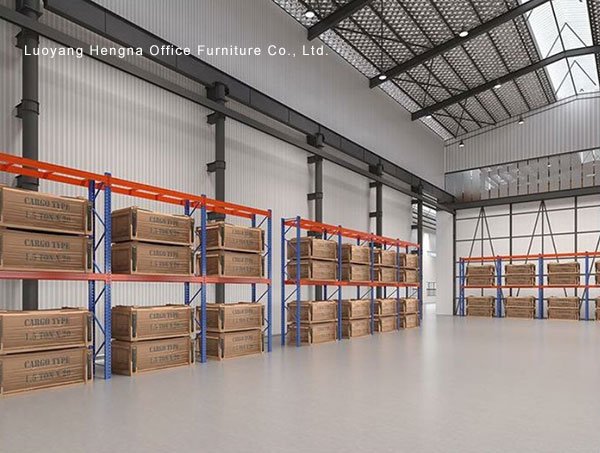
- Freight hubs and cross-docks: One level per client or SKU, forklift picks direct — goods don’t sit, they flow
- Factory raw material storage: Coils on pallets, castings on pallets, sheet stacks on pallets. Off the floor, organized by batch
- Finished goods staging: Order staging before container loading. Stack by shipment, pick by manifest
- E-commerce fulfillment centers: SKU count changes by season, pallet sizes vary — adjust beam height instead of buying new racks
Where It Doesn’t
- Loose small items without pallets → add steel decking panels, or switch to medium-duty shelving
- Warehouse ceiling under 3 meters → four levels won’t fit; at two or three levels you’re better off with light-duty shelving
- Floor uneven beyond ±30mm → fix the floor first; tilted racking puts uneven stress on beam connectors and becomes a safety hazard
- Outdoor without a roof → powder coat is indoor-grade; daily rain, direct sun, and temperature cycles will eat through it in 18-24 months
Assembly Step by Step
No welder, no special tools, no heavy equipment. Four steps, two people.
Step 1 — Stand the upright frames. Unpack the two upright frames, stand them up facing each other at the marked beam length distance. Adjustable foot plates on the base let you level each frame independently if the floor isn’t perfect.
Step 2 — Clip in the beams. Take a beam, angle it slightly, hook the three-prong connector into the diamond hole at your chosen height. Push down until the claw seats. Do both ends. You’ll hear a click when it’s home.
Step 3 — Hammer in the safety pins. A rubber mallet is all you need. The pin slides through the side hole in the connector and locks against the upright. One pin per beam end. Can’t back out under vibration or impact.
Step 4 — Repeat for remaining levels. Work bottom-up. Check each beam is level before moving up. Four levels, eight beams, sixteen pins. Done.
First build: 20-30 minutes. Fifth build: under 10 minutes.
Safety Features
- Safety pin lock: Each beam connector is mechanically locked, not friction-fit. A forklift bumping a loaded beam from below won’t dislodge it.
- Three-point claw contact: The beam connector grabs the upright at three edges of the diamond hole, distributing load across the upright face instead of concentrating on one spot.
- Foot plate leveling: Each upright base has an adjustable foot plate with ±30mm travel. Uneven concrete doesn’t mean a tilted rack.
- Row spacers and back-to-back connectors: Available for double-row configurations. Keeps rows aligned and prevents lean under full load.
- Forklift entry guides: Bolt-on steel guards that mount at the base of the first upright — if a forklift operator misjudges, the guide takes the hit instead of the upright.
Customization Options
Standard sizes ship from inventory. Custom orders take 5-7 extra days.
| Option | Range |
|---|---|
| Upright height | 2000mm to 12000mm |
| Beam length | 1200mm to 4000mm |
| Number of levels | 2 to 8+ |
| Beam load capacity | 800kg to 5000kg per pair |
| Color | Any RAL color, minimum order applies |
| Decking | Steel mesh, steel sheet, or particle board panels |
| Accessories | Back-to-back connectors, row spacers, column guards, guide rails, wire decking, drum cradles |
Tell us your warehouse dimensions, pallet size, forklift type, and load per pallet. We’ll draw up a layout and spec sheet.
Container Loading Guide
KD flat-pack is the whole point. Pre-welded racking ships in assembled frames — empty air between uprights and beams you’re paying freight on. Our racking ships as a stack of steel components in wooden crates.
| Container | Approx. Capacity (4-level standard rack sets) |
|---|---|
| 20ft GP | 40-60 sets |
| 40ft GP | 80-120 sets |
| 40ft HQ | 100-150 sets |
Actual count depends on beam length and upright height. Longer beams eat more floor space in the container. We pack to maximize — every crate is weighed and taped before loading, and we send you the packing list by item code so you can cross-check on arrival.
Maintenance
Powder-coated racking doesn’t need much, but check these twice a year:
- Beam deflection: If a loaded beam sags more than 1/180 of its span, it’s overloaded or damaged. Replace it.
- Connector seating: Walk the aisle and visually check that all safety pins are in place. A missing pin means the beam is held by friction only.
- Upright straightness: If an upright has a visible lean, check the foot plate adjustment first. If the upright itself is bent, replace the frame — bent uprights concentrate stress in ways the design doesn’t account for.
- Surface rust: Minor scratches from forklift contact are cosmetic. If rust spreads beyond the scratch or the coating is flaking off in sheets, contact us — it might be a coating failure, which is covered under warranty if within 1 year.
Get a Quote
Every warehouse has different dimensions, different pallet specs, different forklift turning radius — no such thing as a one-size-fits-all price.
Send these three numbers:
- Warehouse length × width × ceiling height
- Load per level (2500 / 3000 / 4000 / 5000kg)
- Number of levels and total sets needed
Plan + drawing + quote within 48 hours. Sample available if you want to check the build quality first.