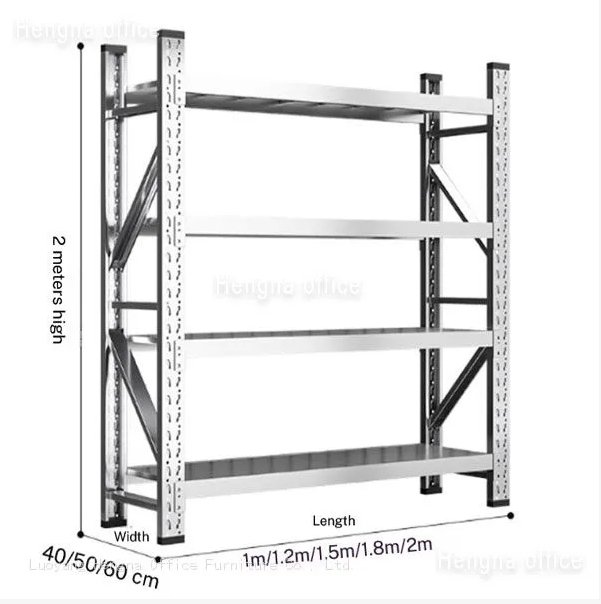
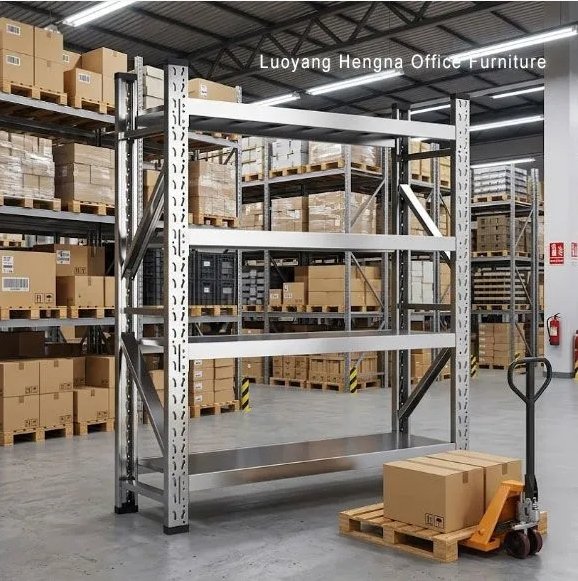
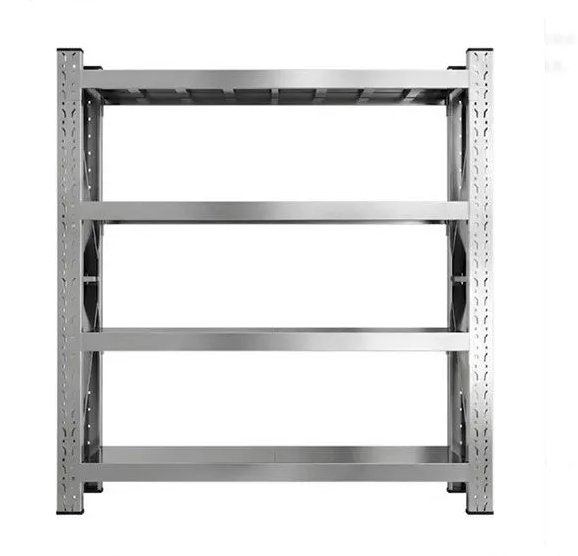
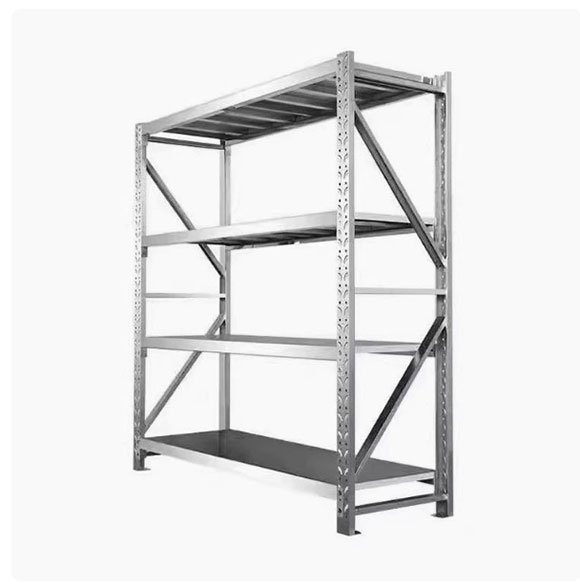
Knock Down Commercial Kitchen Shelving — 4 Tier Heavy Duty Stainless Steel Storage Rack for Restaurants, Anti-Rust Design
Product Overview If you’ve ever tried to get a welded steel rack through a standard kitchen door, you know the problem. It…
Product Overview
If you’ve ever tried to get a welded steel rack through a standard kitchen door, you know the problem. It doesn’t fit. Then you’re cutting it apart or paying extra for a larger delivery entrance. And that’s before you even get to the freight cost.
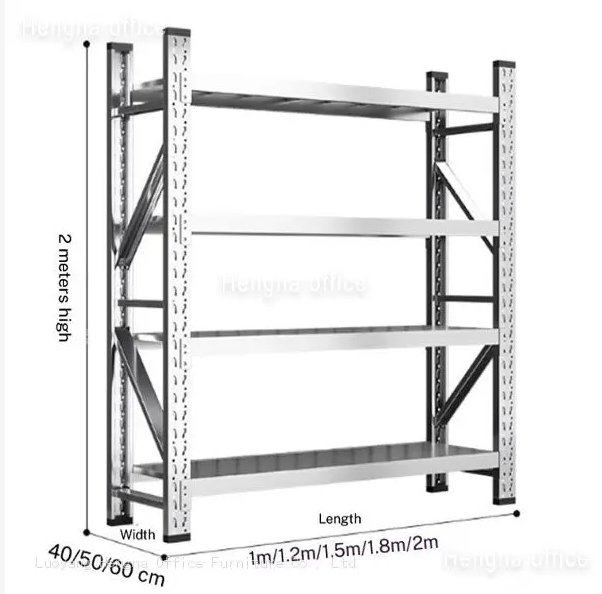
This 4-tier knock down commercial kitchen shelving unit ships flat. Posts, shelves, braces — all separate, all boxed efficiently. Two people can assemble it in under an hour with basic tools. No welding, no specialized labor, no drama.
We’ve supplied these to restaurants, central kitchens, and food service operations for years. The design has been refined through real feedback from working kitchens — not a drawing board.
Why This Shelving Works in a Real Kitchen
1. Knock Down Isn’t a Feature — It’s the Point
Most suppliers list “knock down” like it’s a nice extra. It’s not. For overseas buyers, it’s the difference between a 400freightquoteanda1,200 one.
A fully welded rack ships as one piece. A knock-down unit ships as flat cartons. The volume reduction is roughly 60-70%, depending on the specification you order. If you’re ordering in container quantities, that’s the difference between fitting 200 units and fitting 600.
We’ve had procurement managers tell us this directly: “Your competitor’s rack was 180,butshippingwas180,butshippingwas900. Yours was 210,shippingwas210,shippingwas280. I’m buying yours.”
That’s why “knock down commercial kitchen shelving” shows up in so many procurement search queries. It’s not about the product — it’s about the landed cost.
2. Stainless Steel — 201 vs. 304, and When It Actually Matters
We get asked this on almost every inquiry. Here’s the honest answer, not the sales answer.
201 Stainless Steel is our standard. It contains less nickel than 304, which makes it more affordable to produce. For dry storage rooms — where humidity is controlled and there’s no direct water exposure — 201 performs perfectly well. We have units installed in dry storage rooms that have been in service for 4+ years without visible corrosion.
304 Stainless Steel is what you want if the shelving will be near a dish pit, a steamer, or inside a walk-in cooler. The higher nickel content makes it significantly more resistant to corrosion in high-humidity, high-salt, or high-acid environments. It’s also the grade that health inspectors in North America and the EU expect to see in food prep areas.
One thing to know: 304 isn’t magic. If you never clean it and you’re in a coastal city with salt air, it can still develop surface rust over time. But in realistic commercial kitchen conditions, 304 will outlast 201 by a meaningful margin.
Our recommendation: Dry storage = 201 is fine. Anywhere near water, steam, or food prep = go 304. If you tell us your specific setup, we’ll tell you straight which grade makes sense. No upselling.
3. The Butterfly Buckle System — Why It Matters More Than You Think
A lot of shelving units say “adjustable shelf height” on the listing, but when you actually go to adjust it, you need a wrench, you need to measure, and you basically have to half-disassemble the rack to move one shelf.
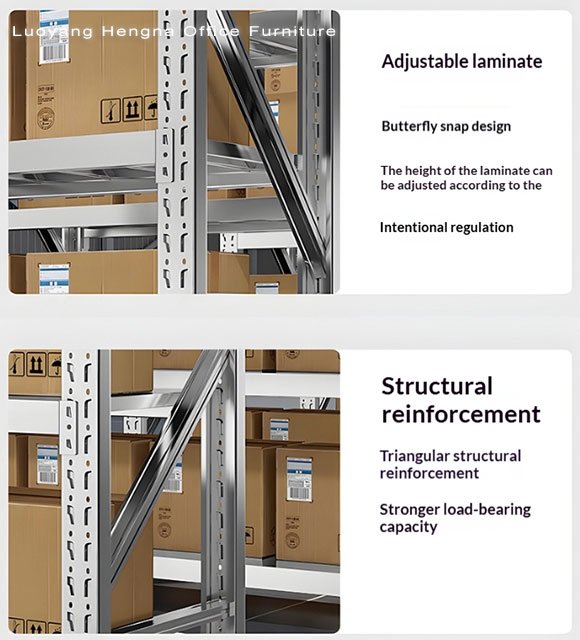
Ours isn’t like that. Release the buckle, lift the shelf, move the buckles to the height you want, set the shelf back down, lock the buckles. One person can do one shelf in a few minutes.
In a working kitchen, storage needs change. This month it’s bulk dry goods. Next month it’s taller equipment or larger containers. Being able to reconfigure shelf spacing in minutes — without tools — is one of those things that sounds minor until you actually need it.
(And by the way — we’ve looked at competitors’ units where the buckles started loosening after 6 months. Ours use a double-lock butterfly design. You can ask your supplier about their buckle design before you buy.)
4. Triangular Reinforcement — Because Sagging Shelves Are a Liability
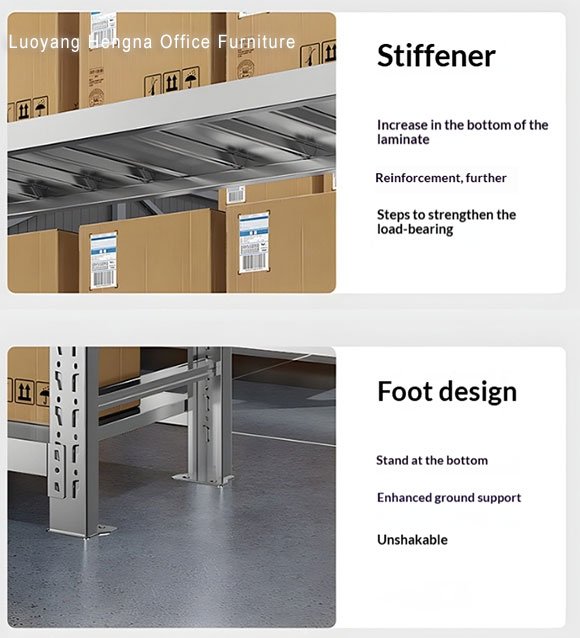
Each shelf has triangular reinforcement ribs on the underside. This isn’t decorative. The ribs distribute weight more evenly across the shelf surface and reduce flex when the unit is fully loaded.
Load capacity: 200-300 kg per shelf (evenly distributed), depending on tier count and shelf dimensions. We test every batch at 1.5x rated load before shipping. We’re willing to put that in the contract.
5. Anti-Rust Surface Treatment — Because Kitchens Are Harsh
Stainless steel handles corrosion better than carbon steel, but it’s not invincible. The shelves here go through an anti-rust surface treatment that adds an extra layer of protection against moisture, cleaning chemicals, and daily wear.
For coastal regions or high-humidity kitchens, we recommend the 304 grade with this treatment. The combination handles corrosive environments significantly better.
Where This Shelving Fits
This isn’t a one-scenario product:
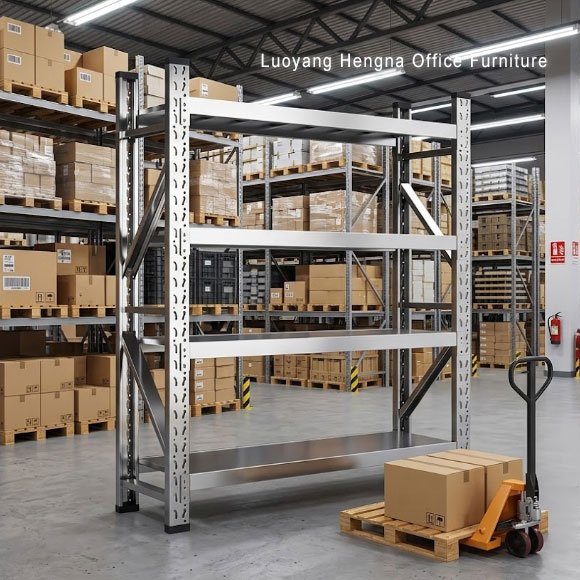
- Restaurant kitchens — dry storage, smallwares, prep area organization
- Central kitchens / commissary kitchens — bulk ingredient storage, packaging materials
- Hotel food prep areas — multi-station storage
- School / institutional cafeterias — high-volume smallwares and dry goods
- Food production facilities — auxiliary storage where food-grade materials are required
- Walk-in cooler perimeters — 304 grade recommended
Knock Down Commercial Kitchen Shelving Specifications — Customizable to Your Needs
| Item | Details |
|---|---|
| Tiers | 4 tiers (3-tier and 5-tier available on request) |
| Material | 201 Stainless Steel (standard) / 304 Stainless Steel (on request) |
| Structure | Knock down, flat-pack shipping |
| Shelf adjustment | Butterfly buckle system, tool-free, double-lock design |
| Reinforcement | Triangular ribs on each shelf + base stabilizers |
| Dimensions | Multiple height / width / length options available |
| Surface treatment | Anti-rust treated, easy to clean |
| Applications | Restaurants, central kitchens, food service facilities |
| Certifications | Available on request (varies by market) |
A note on market differences: North American and EU buyers typically ask about food safety certifications. Southeast Asian buyers often prioritize cost-to-performance ratio. Australian buyers tend to have specific packaging and labeling requirements. Tell us your target market when you inquire — we’ll recommend the right spec.
Frequently Asked Questions
Q: What’s the minimum order quantity? A: MOQ varies by specification. Typically one container load. If you’re testing the market, talk to us — we can sometimes accommodate smaller trial orders. (Honestly, we recommend sampling on the first order. It gives both sides confidence.)
Q: Can I customize the dimensions? A: Yes. We can adjust tier count, dimensions, and material grade. Custom orders have separate lead times and MOQ requirements — we’ll confirm both when you inquire.
Q: We’re a small restaurant in a humid city. Is 201 OK or do I need 304? A: If the shelving is going in a dry storage room (no steam, no direct water), 201 handles it fine. If it’s near the dish pit or a steamer, go 304. We’ve had customers in Guangzhou tell us their 201 units near the wok station started showing rust after 18 months. Save yourself the headache — go 304 for wet areas.
Q: How is this different from epoxy-coated carbon steel shelving? A: Epoxy coatings eventually chip, especially in high-moisture environments, and once they do, corrosion starts. Stainless steel — especially 304 — handles kitchen environments much better over the long term. If you’re comparing on price alone, carbon steel wins. If you’re comparing on longevity and hygiene, stainless wins.
Q: Do you have export experience? A: Yes. We’ve shipped to multiple overseas markets and understand export documentation, packaging, and compliance expectations. If you need, we can provide references from past customers (with their consent).
About the Manufacturer
We’ve been in commercial kitchen equipment for years. This isn’t OEM rebranding — we run our own production line, and every stage from material inspection to finished product has its own QC checkpoint.
We’re not here to oversell. We’ll spec the unit that fits your application and your budget. If 201 stainless meets your needs, we’ll recommend 201. (We actually do this — because a repeat customer is worth more than a one-time upsell.)
Request a Quote
If you’re sourcing shelving for a restaurant group, a central kitchen project, or a food service facility, get in touch. Tell us:
- Your application scenario
- Estimated quantity
- Target market (for certification and spec guidance)
- Any dimensional or material requirements
We’ll respond with a quotation and our recommendation on specification.