Slot and Tab Shelving: Boltless Warehouse Shelving System, Keyhole Assembly 500kg
Ask three warehouse managers what their boltless shelving is called and you may get three answers: slot and tab, keyhole, or rivet…
Ask three warehouse managers what their boltless shelving is called and you may get three answers: slot and tab, keyhole, or rivet shelving. They are describing the same system – uprights with punched slots, beams with tabs that hook into them, no bolts anywhere. The name differs by region and trade habit, which matters when you are searching for the right product and the suppliers do not all use the same words. This page explains the system and the terminology, and gives the spec sheet for the 500 kg class we produce.
The terminology map
| Term | Where it is used | What it describes |
|---|---|---|
| Slot and tab shelving | US industrial catalogs and trade documents | The connection method: beam tabs into upright slots |
| Boltless shelving | Most common US market name | The selling point: no bolts in assembly |
| Keyhole shelving | US and export markets | The slot shape: round top, narrow stem, locks the tab under load |
| Rivet shelving | US legacy term | Older riveted upright designs; today often used interchangeably with boltless |
| Butterfly hole shelving | Chinese factory terminology | Describes the punched hole profile on the upright |
One product family, five names. For buyers, the practical point is simple: if your quote mentions keyhole uprights and tab-end beams, it is this system.
How the connection works
The upright is cold-rolled steel strip, punched with rows of keyhole slots at regular spacing. Each beam ends in a formed tab. Assembly is three motions:
- Hook the tab into the slot at the wanted height
- Push the beam down so the tab’s narrow stem seats in the slot bottom
- Load the shelf – the weight pulls the tab harder into the lock
Because the joint tightens under load, slot and tab shelving stays rigid in daily use while remaining tool-free to adjust. That combination – firm under load, loose when you want to move it – is the reason the design displaced bolted shelving in warehouses.
Specifications for the 500 kg class
| Parameter | Spec |
|---|---|
| Load rating | 500 kg per shelf (300 kg standard class also available) |
| Upright | 1.0 mm cold-rolled steel, keyhole punched, diagonal bracing welded |
| Beams | 1.0 mm double-C profile, three pressed wave ribs, tab-end connectors |
| Shelf panels | 0.5 mm with pressed reinforcement ribs; solid or slat style |
| Levels | 4–5, adjustable without tools |
| Finish | Electrostatic powder coating, multiple colors |
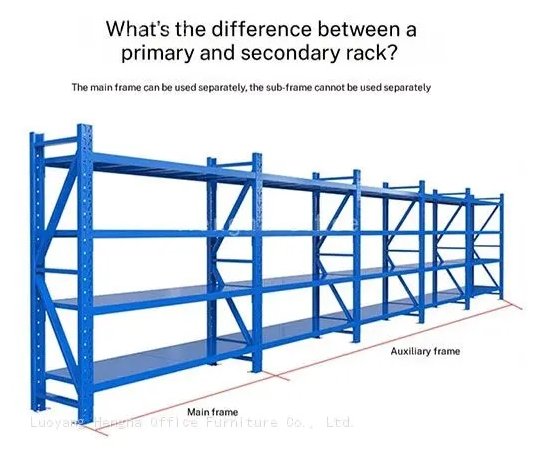
| Frames | Main (two uprights) and add-on (one upright, shares column) |
| Packaging | KD flat pack, container-ready |
The full system walkthrough with accessories and applications lives on the boltless steel shelving 500kg spec page.
Slot and tab vs bolted shelving
| Slot and tab | Bolted shelving | |
|---|---|---|
| Assembly | Hands only, about five minutes per unit | Wrenches, bolts, roughly double the time |
| Adjustment | Lift beam, re-hook at new height | Unbolt, reposition, re-torque |
| Connection wear | Joint tightens under load | Bolts can loosen with vibration, need checking |
| Reconfiguration | Practical and fast | Possible but slow |
| Best for | Warehouses that re-slot often | Permanent single-purpose fixtures |
Where slot and tab shelving is used
- Warehouses and logistics centers – carton storage that re-slots with the product mix
- Factory tool rooms and workshops – 500 kg shelves hold tool boxes, drums, and parts bins
- Retail backrooms – quick layout changes between seasons
- Schools, clinics, offices – lighter loads on the 300 kg class
- Garages and home workshops – the consumer end of the same system
Why the name varies: a short history
The design itself dates back decades. Early versions used riveted uprights, which is where the American “rivet shelving” name comes from – those units were built at the factory and could not be adjusted without drilling. When manufacturers moved to punched slots and hook-end beams, the tool-free adjustment became the selling point, and “boltless” became the market name.
“Slot and tab” appeared in industrial catalogs and purchasing documents as the mechanical description: slots in the upright, tabs on the beam. “Keyhole” describes the punched profile. Chinese factories added “butterfly hole” from the hole shape on the upright. All five names point at the same connection, which is why buying teams that search only one term miss suppliers who use another.
Assembly walkthrough
- Stand the uprights. Main frame uses two; add-on shares one with the previous bay. Fit leveling feet before loading
- Hook the braces. Cross and diagonal braces seat into the same slots and lock the frame against sway
- Set beam heights. Hook each beam’s tabs into matching slot rows on both uprights and push down firmly; a rubber mallet seats stubborn tabs
- Lay the panels. Shelf panels drop onto the beam flanges and locate on the ribs
One person builds a unit in about five minutes. Re-sloting a level later takes under a minute per beam.
Main and add-on economics
The frame system is the quiet money-saver in this design. A main frame carries two uprights and stands alone. Each add-on frame carries one upright and shares the far column of the previous bay. A run of one main plus three add-ons uses five uprights instead of eight – the steel saving is real, and the run has no gaps between units.
For buyers planning a growing warehouse, the pattern is: buy the main frames you need today, extend with add-ons as the floor fills. Re-slotting and re-extending happen with the same hooks, so the layout never gets locked in.
FAQ
Is slot and tab shelving the same as boltless shelving?
Yes. Slot and tab describes the connection; boltless describes the assembly. Keyhole and rivet shelving are additional names for the same family, with minor regional variations in upright punching.
How much weight does it hold?
The heavy class is rated 500 kg per shelf, standard class 300 kg. Match the class to the heaviest single item you store, not the average.
Can one person assemble it?
Yes. Beams hook in by hand; a rubber mallet helps seat the tabs fully. A two-person crew is faster only because one person holds the upright while the other hooks beams.
Do the shelves loosen over time?
The opposite – the tab wedge locks harder as load increases. Shelves that are never moved stay tight for years; shelves that are re-slotted daily stay functional because no threads wear out.
How does it ship?
KD flat pack. Uprights and panels nest, beams bundle, and a container holds a full warehouse layout with space to spare. See the 3PL racking page for how operators build out fast.
What accessories fit this system?
Wire mesh panels, lockable mesh doors, casters, leveling feet, and shelf dividers all fit the keyhole uprights. The same accessories work across the 300 kg and 500 kg classes.
Where can I see load test data?
Load tables and test-assembly reports ship with every order, and we provide the documents for your engineering or safety review before production.
Can the uprights be reused when the layout changes?
Yes. Unhook everything and the components re-assemble in any arrangement. The keyhole slots do not wear out from re-slotting the way bolt threads do, which is why second-life layouts cost nothing beyond labor.
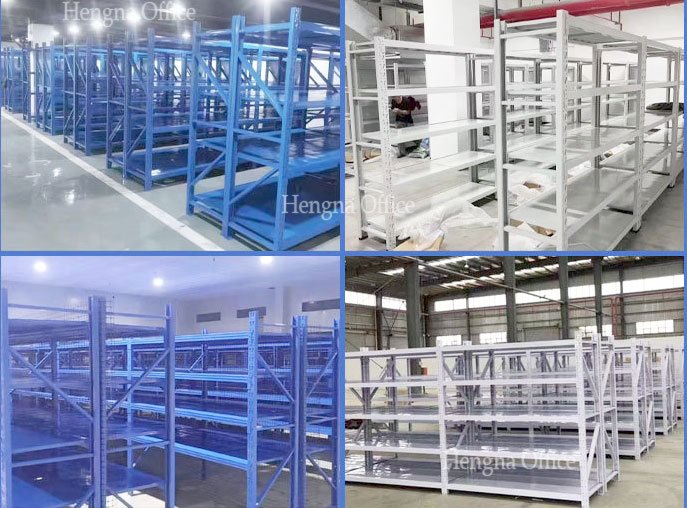
Whatever you call it, the drawing settles it
Buyers arrive with different vocabulary – slot and tab, keyhole, boltless, rivet, butterfly hole – and the factory hears all of them. What removes the guesswork is the drawing: upright profiles, slot spacing, beam hook geometry, and load ratings marked on one page. We send that drawing with every quote, and production runs against it, not against whatever the product got called in the inquiry. For container buyers, the same drawing drives the bundle marks on the loading floor, so the rack that arrives matches the rack that was ordered.
Send your shelf count and load class via the contact page for a factory quote.