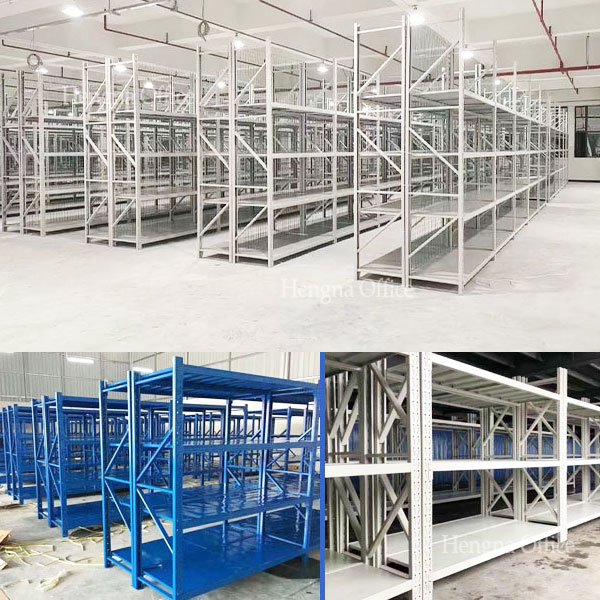
KD vs Welded Stainless Steel Shelving — When Removable Shelves Matter and When They Don’t
The cold room that couldn’t fit a welded rack A cold chain client bought a batch of welded stainless racks. When the…
The cold room that couldn’t fit a welded rack
A cold chain client bought a batch of welded stainless racks. When the container arrived, the cold room door was too narrow. They had to remove the door frame to get the racks inside. A year later, an auditor found mildew under the shelves — welded racks can’t be taken apart to clean the undersides. They switched to KD butterfly-buckle racks after that.
Here’s the thing: KD and welded aren’t about which one is better. They’re about what you need your rack to do.
What’s the actual difference
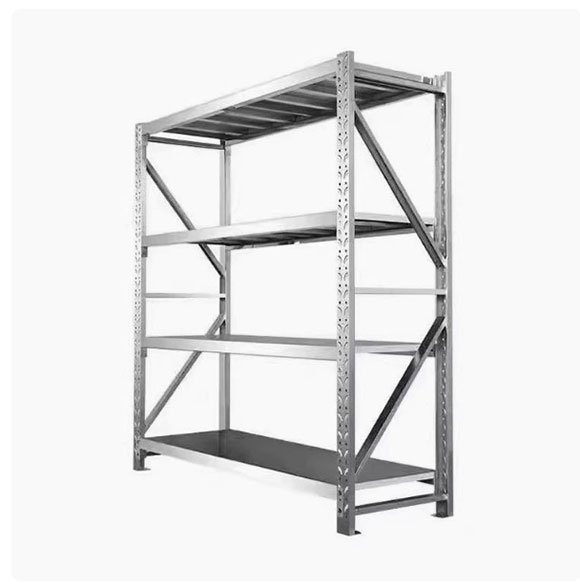
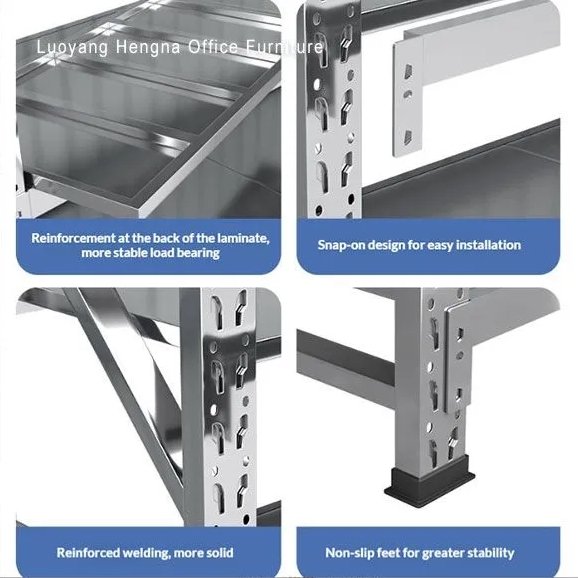
KD means knock-down. Shelves and uprights come separate, locked together with butterfly snap clips. No screws, no tools. Pop a shelf off — snap it back on — ten seconds per shelf.
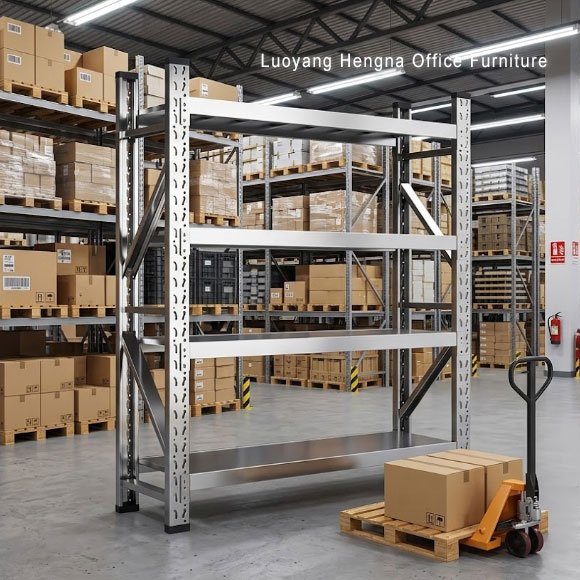
Welded means exactly what it sounds like. Shelves and uprights are fused at the joints. The rack arrives as one solid piece. It’s rigid, stable, and you don’t assemble a thing.
The two designs solve different problems.
Three things KD does that welded can’t
First, you can actually clean it.
Food plants, pharma facilities, labs. These places clean their shelving regularly. With welded racks, you wipe what you can reach. Crawl underneath with a rag or spray wand. The shelf undersides, the joints, the back corners — nobody ever gets those.
KD changes that. Pop each shelf off, carry it to a wash station, and hit every surface — top, bottom, edges, clip slots. Pressure wash it. Soak it in sanitizer. Dry it. Snap it back. The entire rack can be disassembled and reassembled in under an hour.
When an auditor shows up, you pull a shelf off and hand it to them. The bottom is clean. No mildew, no black spots, no hiding places. That’s the GMP and HACCP advantage.
Second, shipping costs less.
KD shelves and uprights stack flat. One container holds three to four times the number of KD racks as it does welded racks. Freight is charged by volume. That’s real money.
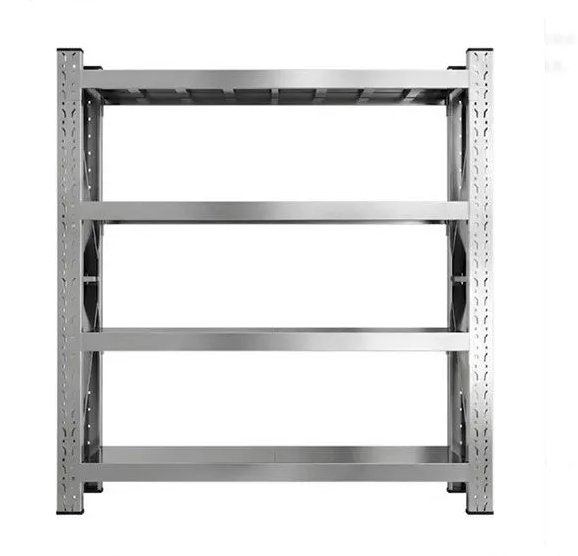
Third, it goes where welded won’t fit.
Cold rooms with narrow doors. Basements. Upper floors. If a welded rack won’t fit through the door, you’re removing door frames or rigging cranes. KD comes in flat and you assemble it inside.
What welded does that KD doesn’t
Welded racks are more rigid. The joints are fused — no clips, no snap mechanisms. In heavy-duty warehouses, where forklifts knock into racks daily and shelves hold raw steel and heavy tooling, welded holds up better.
Also, zero assembly. The rack arrives ready. Forklift it into position and start loading. For warehouses that don’t need to take racks apart, that’s one less step.
When to choose KD
- Food processing, seafood, commercial kitchens — cleaning is non-negotiable. KD lets you wash every surface.
- Pharmaceutical GMP facilities — auditors check for cleaning blind spots. KD means you pull a shelf off and show them the bottom.
- Cleanrooms and laboratories — sanitizer wipe-downs are daily. KD makes them thorough.
- Cold rooms and cold chain — high humidity, narrow doors. KD packs flat and assembles inside.
- Export — flat-packed KD cuts shipping costs by 3-4x per container.
When to choose welded
- Heavy storage — tooling, dies, raw metal stock. Load is high, forklifts hit hard, welded is more stable.
- Fixed workstations — racks on a production line that never move. Assembly not needed.
- Outdoor yards — nobody is taking these apart for cleaning anyway.
KD Vs Welded Stainless Steel Shelving Quick comparison
| KD Butterfly-Buckle | Welded | |
|---|---|---|
| Can you take apart to clean? | Yes, every shelf comes off | No, wipe in place |
| Shipping cost | Low (flat-packed) | High (takes volume) |
| Assembly | 10 seconds per shelf, no tools | None, forklift it in |
| Rigidity | Clips lock tight, sufficient | Fused joints, higher |
| Best for | Food/pharma/cold chain/export | Heavy warehouse/fixed stations |
| Audit compliance | Shelves off, show the bottom | Blind spots, possible write-up |
The cost math
KD costs slightly more to manufacture — the butterfly clip mechanism adds fabrication steps. But freight savings and cleaning efficiency usually cancel that out and then some.
If a food plant buys welded racks and the auditor flags mildew under the shelves a year later, they’re either replacing the rack or writing a mountain of cleaning deviation reports. The labor to swap racks plus the compliance overhead often outweighs KD’s upfront premium.
Welded makes sense when cleaning doesn’t matter and stability does. Two different tools, two different jobs.
FAQ
Q: Do the butterfly clips loosen over time?
No. Stamped stainless steel with a self-locking profile. We’ve cycled them hundreds of times — holding force stays consistent.
Q: Is KD load capacity lower than welded?
Single shelf at 300-500kg is standard. Welded has a higher ceiling for extreme loads. For warehouses, production lines, and cold storage, KD is more than enough.
Q: How much shipping do I save with KD?
Three to four times the rack count per container compared to welded. The exact number depends on your configuration, but ocean freight charges by volume — KD wins every time.
Q: Can I mix KD and welded in the same facility?
Yes. KD on washdown production lines, welded in the dry storage warehouse. They look unified, function differently.
Q: MOQ?
Standard sizes start at a few dozen units. Sample order first if you want to inspect the build before committing to volume.
Q: Packaging for export?
Moisture film wrap, corner protectors, KD flat-packed. Arrives dry and undamaged.
Q: Warranty?
One year.
Q: Quote turnaround?
24 hours.
KD or welded — it comes down to whether you need to take the rack apart. If cleaning and audit compliance matter, go KD. If you need maximum rigidity and will never move or wash the rack, go welded. Not sure? Tell us what your facility looks like and we’ll help you decide. 24-hour quote.