Pallet Racking vs. Medium-to-Heavy Duty Long Span Shelving: Which Storage Solution Best Fits Your Inventory Needs?
Pallet Racking vs. Medium-to-Heavy Duty Long Span Shelving:In modern warehousing and logistics management, selecting the appropriate shelving system is crucial for maximizing…
Pallet Racking vs. Medium-to-Heavy Duty Long Span Shelving:In modern warehousing and logistics management, selecting the appropriate shelving system is crucial for maximizing space utilization, optimizing operational efficiency, and controlling operational costs. Faced with a wide array of shelving types, many European and American companies often hesitate between “Pallet Racking” and “Medium-to-Heavy Duty Long Span Shelving.” This article provides a clear comparison of these two mainstream storage solutions based on structural characteristics, applicable scenarios, cost-effectiveness, and flexibility, helping you make a more informed decision.
What is Pallet Racking?
Pallet racking stands as one of the most prevalent high-density storage systems in European and American warehouses. Comprising upright columns, cross beams, and deck panels (or pallet support beams), it is specifically engineered for forklift access to standard palletized goods. Its key advantages include high load capacity (typically 1,000–5,000 kg per level), heights exceeding 10 meters, and support for multiple access strategies like First-In-First-Out (FIFO) or Last-In-First-Out (LIFO).
Pallet Racking Suitable Applications:
– Storing standardized palletized goods (e.g., food, daily necessities, industrial components)
– High-frequency inbound/outbound operations
– Large distribution centers or manufacturing plants requiring maximized vertical space utilization
What is Medium-Heavy Duty Long Span Shelving?
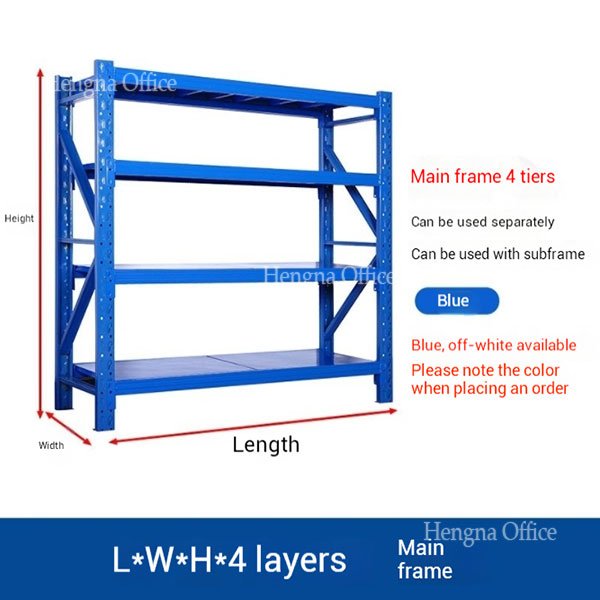
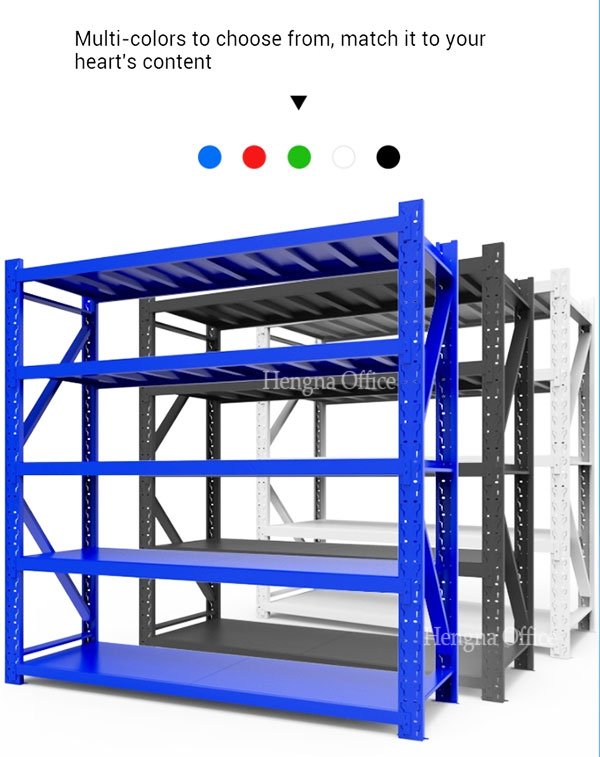
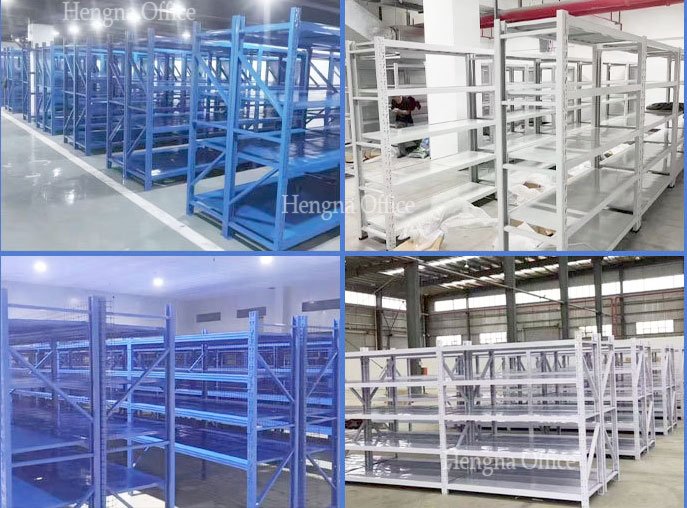
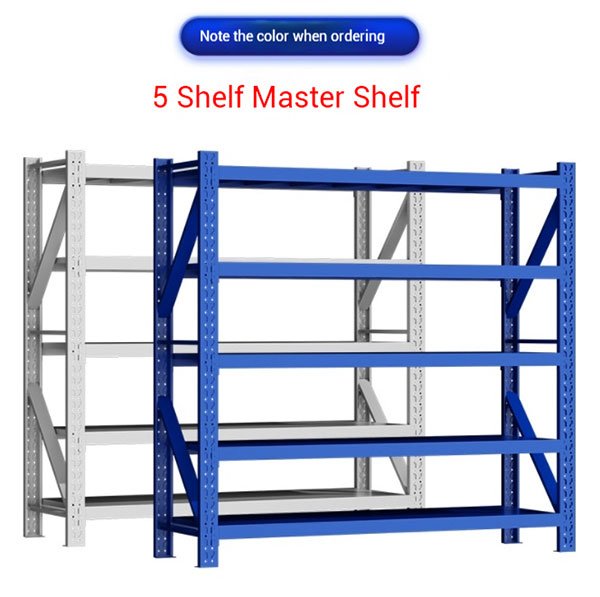
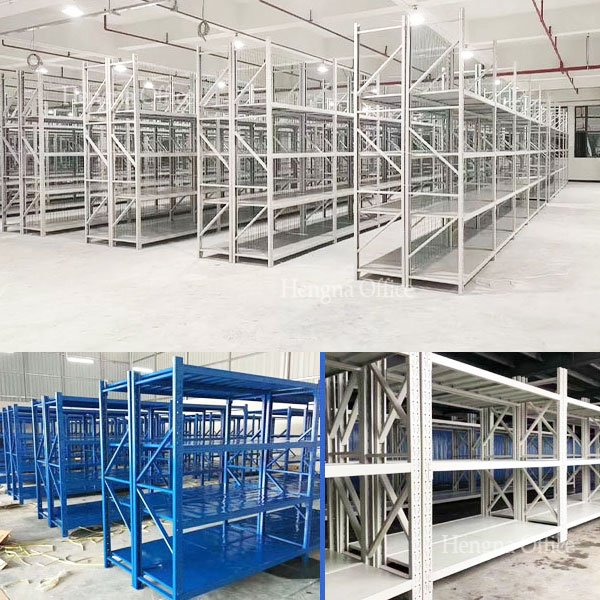
Medium-heavy duty long span shelving is a modular, adjustable open shelving system typically used for manual picking or light forklift-assisted operations. Its shelves consist of steel or wooden panels with extended spans (commonly 1.5–3 meters), suitable for storing non-palletized, irregularly shaped, or bulky items like pipes, panels, toolboxes, etc.
Medium-Heavy Duty Long Span Shelving Suitable Scenarios:
Storage of small-batch, multi-category non-standard goods
Retail backrooms, repair workshops, e-commerce sorting areas
Environments requiring frequent manual picking with moderate load-bearing requirements
Pallet Racking vs. Medium-to-Heavy Duty Long Span Shelving Key Comparison Dimensions
| Dimension | Beam Pallet Racking | Medium & Heavy-duty Long-span Racking |
|---|---|---|
| Load Capacity | High (suitable for heavy pallets) | Medium (suitable for small to medium bulk items) |
| Access Method | Forklift mechanized operation | Manual + hand cart mainly |
| Installation Flexibility | Requires professional installation, complex adjustments | Modular design, easy assembly and adjustment |
| Space Utilization | Extremely high (can expand upward) | Medium (limited by manual operation height) |
| Initial Investment | Higher | Relatively lower |
| Maintenance Cost | Low (stable structure) | Low (but attention needed for layer |
How to Choose the Best Solution for Your Needs?
If you operate a large distribution center, third-party logistics (3PL) facility, or manufacturing warehouse primarily handling standard palletized goods, beam-style pallet racking is undoubtedly the top choice. It integrates seamlessly with automated equipment like stacker cranes and AGVs, significantly boosting throughput efficiency.
However, if you operate a small retail backroom, auto repair shop, or e-commerce fulfillment center that frequently handles non-standard items or relies on manual picking, medium-to-heavy duty long-span shelving offers greater practicality and cost-effectiveness. Its open structure facilitates visual management and quick access, making it ideal for space-constrained environments.
There is no single “best” shelving system; only the most suitable solution exists. Beam-style pallet racking emphasizes efficiency and capacity, while medium-to-heavy-duty long-span shelving excels in flexibility and adaptability. Only by evaluating your inventory type, operational processes, staffing levels, and budget before making a choice can you truly maximize warehouse efficiency.