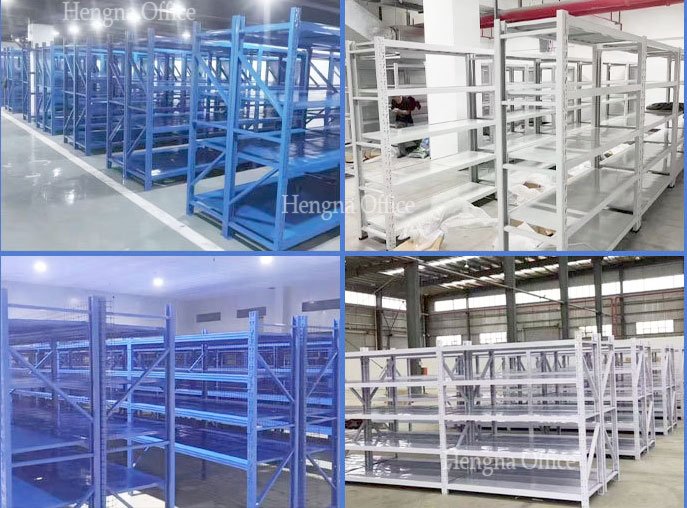
Heavy Duty Cantilever Rack for Lumber & Pipe Storage: 1500kg Arm Load, Single & Double Sided
Lumber, steel pipe, aluminum extrusions, carpet rolls – any warehouse that stores long materials knows the problem. Standard pallet racks waste the…
Lumber, steel pipe, aluminum extrusions, carpet rolls – any warehouse that stores long materials knows the problem. Standard pallet racks waste the space above and around them, block access, and leave valuable stock hard to reach. A heavy duty cantilever rack solves this with one design change: no front columns. Materials slide in from the side, rest on arms that adjust to any length, and come out again without moving everything else.
This guide covers the structure, the load figures that matter, and the layout options, based on our production specs in Luoyang, Henan.
What a cantilever rack is
A cantilever rack has three parts:
- Base – the floor frame that anchors the rack and stops it tipping under load
- Column – the vertical structure, usually H-beam or cold-rolled steel, that carries all the weight
- Arms – horizontal brackets bolted to the column, holding the actual materials
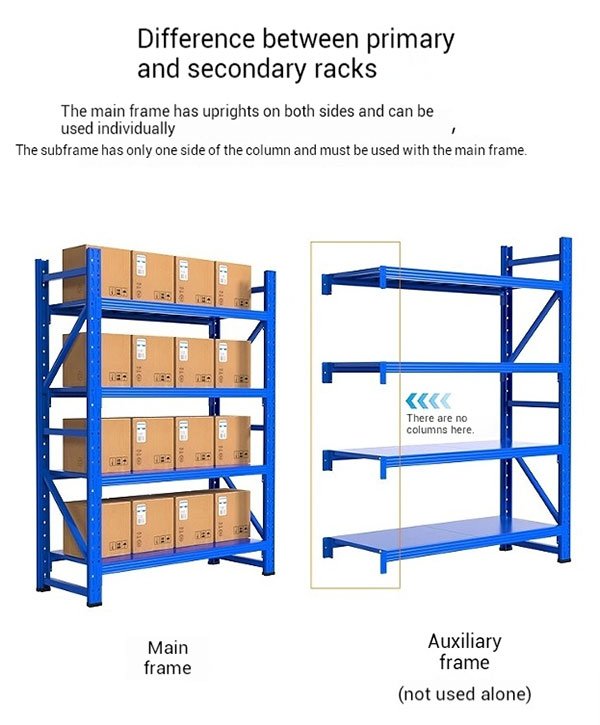
Because there are no vertical supports at the front, a forklift can drive straight in and place a 6-meter pipe without threading it through an opening. Arm heights adjust independently, so one rack can hold short plywood sheets on one level and 12-meter steel bars on the next.
Load capacity: the numbers to plan around
Our cantilever racks are built in three load classes:
| Class | Max arm load | Typical use |
|---|---|---|
| Light duty | 500 kg per arm | PVC pipe, trim, small profiles |
| Medium duty | 800 kg per arm | Lumber bundles, furniture, carpet rolls |
| Heavy duty | 1,500 kg per arm | Steel pipe, structural beams, rebar |
Arm length goes up to 1.5 meters standard. Rack height is 2.5 meters for manual picking or up to 6 meters for forklift operation. Arms are box-section steel, 10–20 mm wall thickness, with internal ribbing and cross-bracing to stop deflection under load.
One point buyers miss: arm load is not rack load. A double-sided rack with six arms per side at 1,500 kg each carries a lot of weight, and the base and floor anchoring have to be engineered for it. That is why the base design matters as much as the arms.
Single-sided or double-sided
- Single-sided racks stand against a wall. They are cheaper per position and suit narrow aisles. Wall-mounted versions save even more floor space for lighter loads
- Double-sided racks share one column row between two arm sets. They roughly halve the floor footprint for the same stored volume and suit central aisles with forklift access from both sides
A typical layout: single-sided along both walls, double-sided down the center. That arrangement uses the aisle for both sides of the center rack and keeps wall space for lighter stock.
Construction details that decide service life
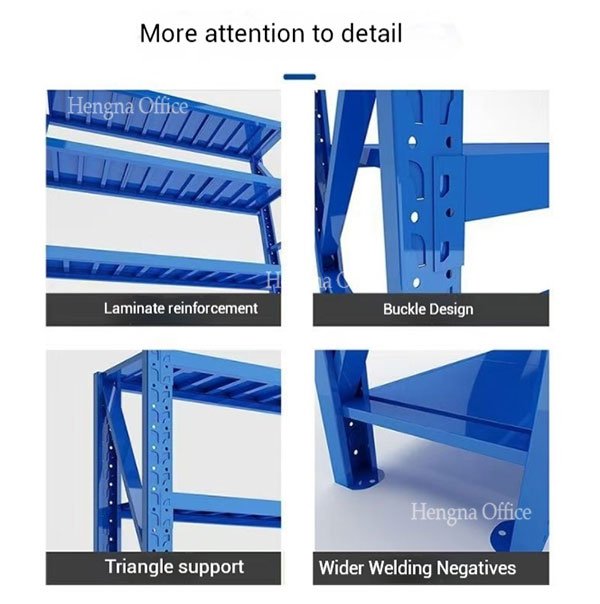
Columns. Rolled from Q235 strip steel into C-sections. Arm connection holes are punched at 140 mm intervals, so arm heights adjust in 140 mm steps – enough range for most material mixes.
Bases. Two options:
- H-beam base for heavy loads – national-standard steel selected by weight capacity, precision-drilled bolt holes, welded base plate with expansion bolt anchors into the concrete floor
- Profile base for flexible layouts – two C-sections welded back to back with a connecting plate, bolted assembly, easier to reconfigure
Both anchor to the floor with expansion bolts. That anchoring is what stops the rack tipping when a forklift drops a heavy bundle on one arm.
Safety fittings. End stops bolt onto the arms so pipe and lumber cannot slide off the back. Arm stoppers add a physical barrier at the front. For racking over 3 meters, we recommend aisle guidance or column protectors in high-traffic areas.
What you gain vs. standard pallet racking
- Floor space. A double-sided cantilever system stores long goods on both sides of one column line, cutting floor footprint by roughly half compared to putting the same material on pallet racks
- Access speed. Open-front design means every item is reachable without digging through other stock. Retrieval time for a specific pipe or board drops sharply
- Fewer SKU limits. Arm heights change independently per level, so mixed lengths and mixed products live on the same rack
- Less damage. Materials sit on flat arms with no vertical obstructions to catch edges on loading
Where cantilever racking is used
- Lumber yards and construction – timber, plywood, drywall, rebar. The open design lets forklifts place boards directly from the truck
- Steel service centers and metalworks – pipe, tube, structural beams, plate. Heavy duty arms at 1,500 kg handle the dense stock
- Distribution and logistics – carpet rolls, PVC pipe, aluminum extrusions, oversized furniture
- Automotive plants – exhaust pipes, chassis frames, metal rods stored next to the line
FAQ
How much weight can a cantilever rack arm hold?
In our range, 500 kg light duty, 800 kg medium, and 1,500 kg heavy duty per arm. Confirm the class against your heaviest single bundle before ordering – arm load is the design limit.
Can arm heights be changed after installation?
Yes. Arms bolt to the column at 140 mm hole intervals, so you reposition them with a spanner. No welding, no re-drilling.
Do cantilever racks need floor anchoring?
Yes. Expansion bolts into a sound concrete floor are required for safe operation, especially on double-sided and 6-meter-tall racks. We supply the base plates and bolt patterns with every order.
What is the delivery lead time?
For standard cantilever rack configurations, 2–3 weeks from confirmed order. Custom heights and load classes add a week.
Built by Luoyang Hengna Office Furniture
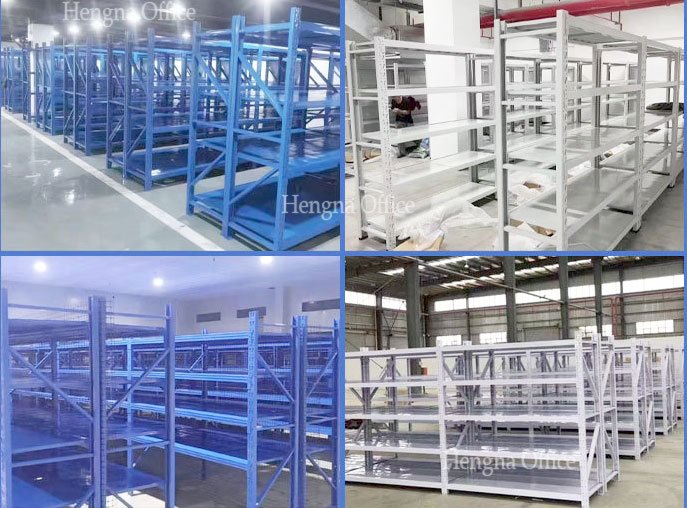
Cantilever racks on this page are produced by Luoyang Hengna Office Furniture Co., Ltd., a steel racking and storage manufacturer in Luoyang, Henan – one of China’s main steel furniture production areas. You deal directly with the factory: arm loads, heights, and hole patterns are confirmed against production drawings before manufacture. Single- and double-sided layouts, custom arm lengths, and OEM specs are all available.
Send us your material lengths and weights via the contact page and we will send back a layout with the load figures worked out for your warehouse.