How to Calculate Shelving Load Capacity and Plan Warehouse Layout: The 3-Step Framework
In warehouse planning, shelving selection is the core factor determining operational efficiency and safety. Many companies often suffer from space wastage, inefficient…
In warehouse planning, shelving selection is the core factor determining operational efficiency and safety. Many companies often suffer from space wastage, inefficient access, and even safety hazards due to poor shelving choices. This article systematically breaks down the three-step shelving selection method, providing a comprehensive practical guide from foundational calculations to implementation planning. It empowers you to make informed decisions and maximize warehouse efficiency.
I. Understanding the “Three-Step Method”: The Logical Core of Systematic Selection
The “Three-Step Shelving Selection Method” is a progressive, systematic approach. Its core logic lies in transforming abstract storage requirements into concrete parameters, then matching these parameters to the optimal shelving solution. The three steps are:
- Step 1: Calculate Goods Weight and Attributes — Determine “What to Store”
- Step 2: Survey Warehouse Space Conditions — Define “Where to Store”
- Step 3: Match Shelving & Plan Layout — Solve “How to Store”
These steps are interdependent and indispensable. Skipping any step may lead to selection errors.
II. Two Critical Questions and Answers
Question 1: Can we simply use the average weight for goods?
Answer: Absolutely not. This is the most common misconception. Shelving load capacity design must be based on the weight of the “heaviest load unit.” For example, if most of your goods weigh 300kg per pallet, but 10% of heavy goods reach 800kg per pallet. Selecting shelving rated for 500kg/tier based on the average could easily cause beam deflection or collapse when heavy pallets are loaded. The correct approach is to calculate each tier’s load capacity based on the heaviest pallet.
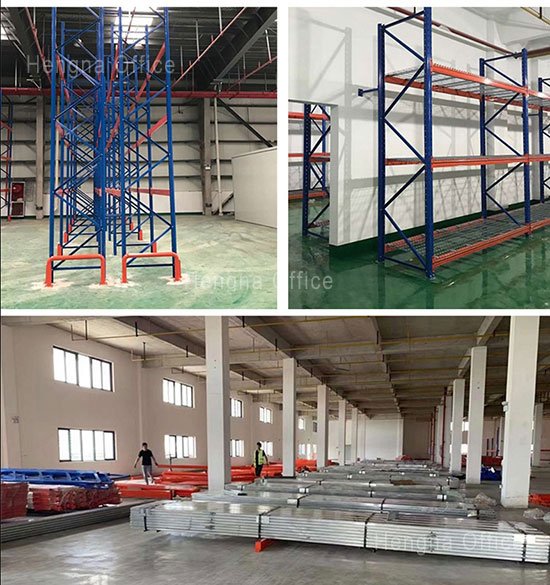
Question 2: Do structural columns and fire sprinkler pipes in the warehouse inevitably sacrifice storage space?
Answer: Customized planning can minimize space sacrifice. Modern shelving systems support high customization. Professional approaches include:
- – Designing aisles or infrequently used storage zones around pillar locations
- – Customizing non-standard shelving units to “work around” obstacles
- – Planning low-height storage or picking zones beneath pipes
The core principle is integrating spatial constraints into preliminary design rather than compromising afterward.
III. Three Major Benefits of Systematic Selection Methods
Mitigate safety risks and reduce hidden costs: Selection based on precise load-bearing calculations fundamentally prevents rack deformation from overloading, avoiding losses from accidents, personnel injuries, and operational disruptions—the greatest cost savings.
Increase space utilization by 15%-40%: Through site surveys and planning, maximize use of warehouse height, corner areas, and irregular spaces. For instance, narrow aisle racking or drive-in racking can increase storage density by over 30% compared to traditional beam racking.
Optimize Workflows and Improve Access Efficiency: Layouts aligned with goods turnover rates (e.g., fast-moving goods near exits) combined with appropriate handling equipment (e.g., forklift types) significantly reduce picking paths and times, directly boosting warehouse throughput.
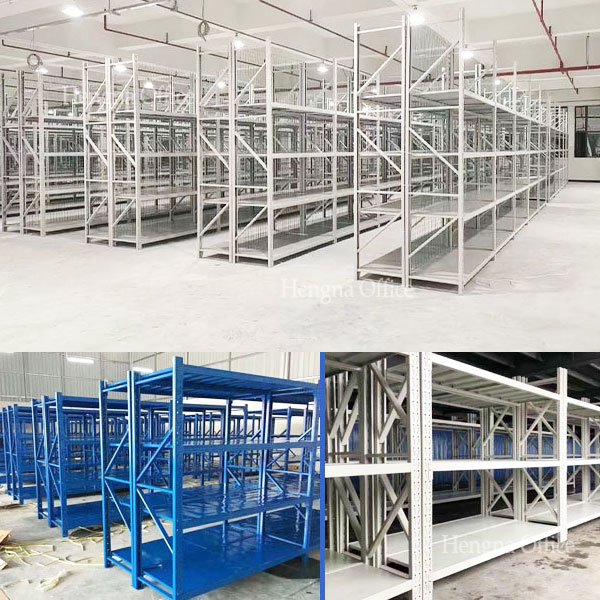
IV. Four-Step Implementation: A Detailed Guide from Theory to Practice
Step 1: In-Depth Goods Assessment—Establishing the Data Foundation
Calculate unit weight: Use floor scales to measure the weight of the heaviest single item, full carton, and standard pallet unit.
Determine total storage weight: Calculate the combined weight of goods planned for a single shelving zone to assess floor load capacity.
Record Physical Dimensions: Measure goods’ length, width, and height—especially maximum dimensions—which determine storage bay sizing.
Step 2: Comprehensive Warehouse Survey—Mapping Constraints
Measure Clear Height: Measure height from floor to lowest obstructions (light fixtures, pipes, beams) to determine maximum racking height.
Verify floor load capacity: Consult property management or construction team to obtain warehouse floor load data (units: tons/square meter). This is critical for heavy-duty shelving safety.
Mark all constraints: Clearly indicate the location and dimensions of columns, fire hydrants, doors, ramps, and main aisles on the floor plan.
Step 3: Scientific Selection Matching — Develop Core Solutions
Select Type Based on Weight:
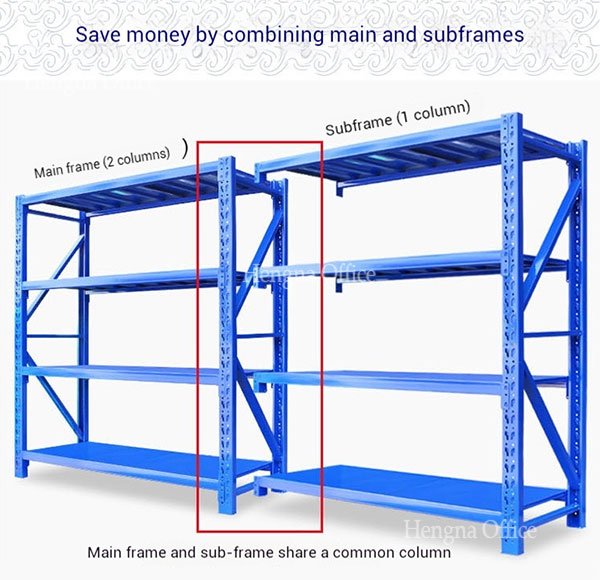
Load per layer < 500kg: Light/medium-duty shelving.
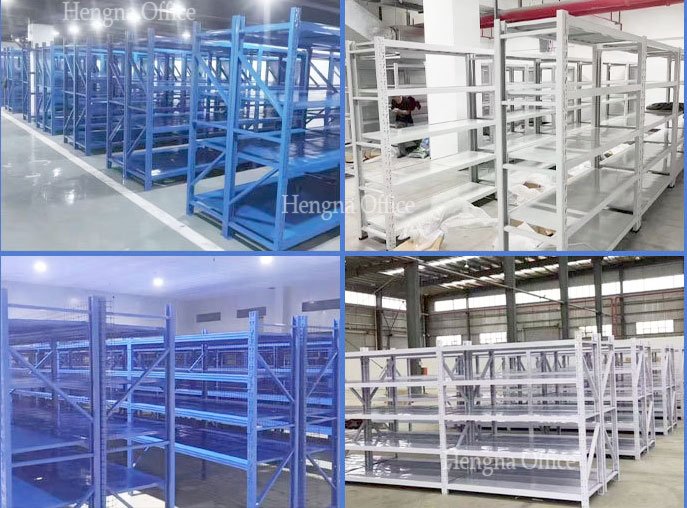
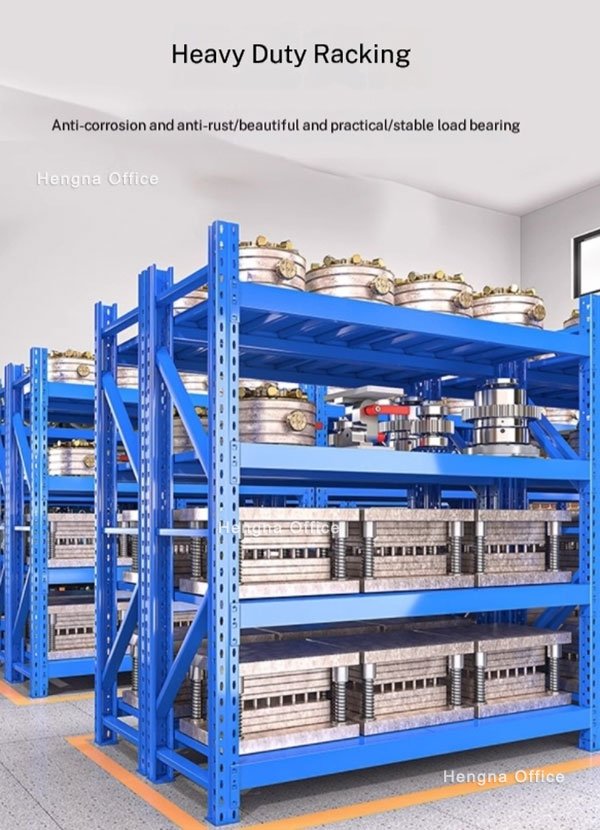
Load per layer 500kg–2 tons: Standard beam racking.
Load per layer > 2 tons & single product category: Consider drive-in or shuttle racking.
Long materials (e.g., profiles, panels): Cantilever racking.
Determine parameters based on layout:
Determine the number of shelf levels and height per level based on net height and forklift lift height.
Plan shelf length, depth, and aisle width based on pallet dimensions and aisle requirements (determined by minimum forklift turning radius).
Plan the relationship between shelves and obstacles to determine customized solutions.
Step 4: Develop Planning Proposal and Budget
Compile all data and requirements into a detailed Shelving Requirements Planning Document. Use this to solicit quotes and compare proposals from multiple suppliers, ensuring objectivity and cost-effectiveness.
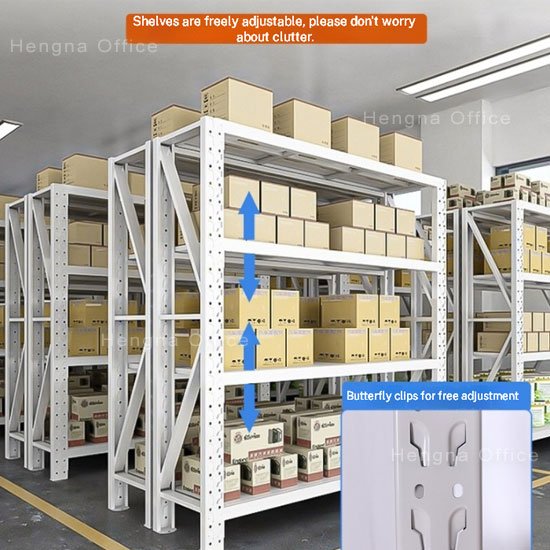
V. Practical Results Showcase
Case Study 1: E-commerce Apparel Warehouse Renovation
Challenge: Existing shelving designed for average weight caused severe deformation in high-demand zones; chaotic picking paths led to low efficiency.
Application of Three-Step Method: 1) Calculate load capacity based on heaviest apparel cartons; 2) Survey warehouse to identify unused vertical space; 3) Replace bestseller zone with heavy-duty beam shelving and implement “dual-picking-face” layout.
Result: Safety hazards eliminated, picking efficiency increased by 25%, and storage capacity expanded by 20% through adding an extra shelf level.
Case 2: New Construction of Manufacturing Raw Material Warehouse
Issue: Raw materials (steel components) were heavy, varied in size, and required high storage density.
Application of Three-Step Method: 1) Strictly grouped components by maximum weight and length; 2) Confirmed floor had been hardened to meet load-bearing standards; 3) Selected heavy-duty beam racks for primary storage areas and custom cantilever racks for oversized components.
Outcome: Storage solution perfectly matched material characteristics, achieving 35% higher space utilization than original plan. Material handling became orderly, supporting JIT supply to production lines.
Rack selection is not merely product procurement but a technical decision grounded in data and planning. Following the systematic three-step approach—“cargo assessment, warehouse survey, matching plan”—transforms you from a passive “rack buyer” into an active “warehouse space efficiency planner,” ultimately achieving safe, efficient, and high-density intelligent warehousing.