Boltless Shelving for Container Homes — Tool-Free No-Drill Storage That Fits Tight Ceilings
Container homes and tiny houses share a storage problem that ordinary shelving is not built for. The ceiling is low, the walls…
Container homes and tiny houses share a storage problem that ordinary shelving is not built for. The ceiling is low, the walls are steel, and you rarely want to drill into the shell just to hang a rack. Screwing into a container wall risks puncturing insulation or the weatherproof skin, and once a unit is in place you do not want to be stuck with shelves bolted in permanently.
That is exactly the gap boltless shelving for container home storage fills. It stands on its own, assembles with no tools, and rearranges in minutes when the room changes purpose. This guide covers why tool-free shelving is a natural fit for container and tiny-house layouts, what to check before ordering, and how factory-direct supply keeps it affordable.
Why boltless shelving suits a container layout
A container interior is roughly 2.4 to 2.7 meters wide, which leaves narrow corridors and short wall runs. A freestanding boltless rack makes the most of that space because it does not need wall support, so you can place it along any wall, in a corner, or even as a room divider. The uprights sit on adjustable feet, so the rack stays level even on a container floor that is not perfectly flat.
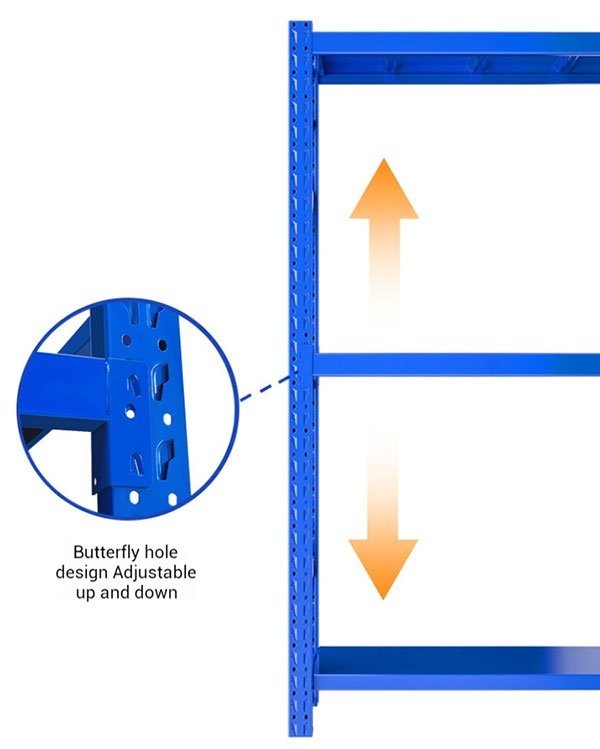
Because the shelves clip into the upright posts instead of being welded, you can set each shelf at the height your items actually need. A tall shelf for a kettle and toaster, a shallow shelf for spices, a lower zone for a washing machine — the same unit adapts to what the room does day to day. That flexibility matters more in a small container than in a full-size house, because every cubic foot counts and the room tends to change purpose over time.
No drill, no welding, no tools on site
The clearest advantage of a tool-free rack in a container home is that installation cannot damage the shell. Most boltless designs use keyhole slot-and-tab or snap-in fittings: you tap the shelf end into the post and it locks in place. Assembly is a job one person does in under an hour, and if you move the rack to another corner or another container, it comes apart just as easily.
| Boltless shelving benefit | What it means for a container home |
|---|---|
| Tool-free assembly | No drill, no welder, no wall anchors — the steel shell stays untouched |
| Freestanding with leveling feet | Stands on uneven container floors and needs no wall support |
| Adjustable shelf heights | Reconfigure spacing to fit kettles, bins, appliances, and boxes |
| Knock-down design | Flat-packs for shipping and reassembles if the home is relocated |
| Heavy-duty steel frame | Holds the weight of real household and workshop loads without wobble |
The slot-and-tab fitting itself is worth a close look before you order. Well-spaced keyhole positions let you move a shelf up or down in small steps, so you are not stuck with one fixed layout. A rack with tight, consistent slots is also faster to assemble and less likely to loosen over time than one with shallow fittings.
Freestanding vs wall-mounted: what changes in a container
| Consideration | Freestanding boltless rack | Wall-mounted shelving |
|---|---|---|
| Drilling into the shell | None | Requires anchors and drill holes |
| Moving the rack | Easy, portable | Hard, leaves holes behind |
| Load support | Rated to its own frame | Depends on the wall and fixings |
| Relocation of the container | Rack travels with it | Stays or gets patched |
For a container that may be sold, moved, or reconverted, the freestanding option wins on reversibility alone. You never compromise the structural skin, and nothing is lost when you take the rack out.
Where a container shelving unit works hardest
Most container homeowners and camp builders end up using the rack in several zones at once:
- Kitchen corner — a compact unit holds cookware, dry goods, and small appliances at reachable heights.
- Bedroom divider — a tall boltless rack doubles as a wardrobe and storage partition between living and sleeping areas.
- Workshop corner — in an off-grid or worksite container, the same rack stores tools, batteries, and materials off the floor.
- Entry and mudroom — keep boots, coats, and outdoor gear out of the way with an open, ventilated shelf.
Because the rack is freestanding and adjustable, one unit can be moved from zone to zone as the container’s function changes — which is common when a container starts as a storage shed and later becomes living space.
Choosing the right size and capacity
Container interiors are narrow, so width and depth matter more than height. Measure your available wall run and door clearance before ordering. A unit roughly 900 to 1200 mm wide and 400 to 500 mm deep fits most container corners without blocking the corridor.
| Measurement | What to check |
|---|---|
| Wall run | Total horizontal space available for the rack |
| Ceiling height | Tallest shelf must clear the door and allow a comfortable reach |
| Door clearance | Assembled unit and your walking path both need room |
| Load per shelf | Size for your heaviest item, not the average |
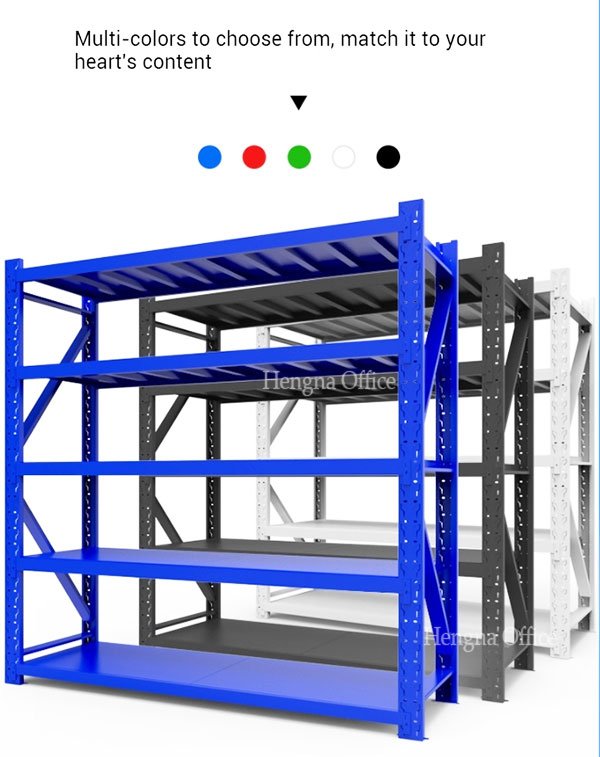
Also check the post style. Look for uprights with clearly spaced keyhole or slot positions, so you can move shelves in small increments rather than being stuck with one fixed layout. Quality powder-coated steel resists scuffs and cleans easily, which keeps the rack looking tidy in a compact space.
Tool-free shelving for tiny houses and remote camps
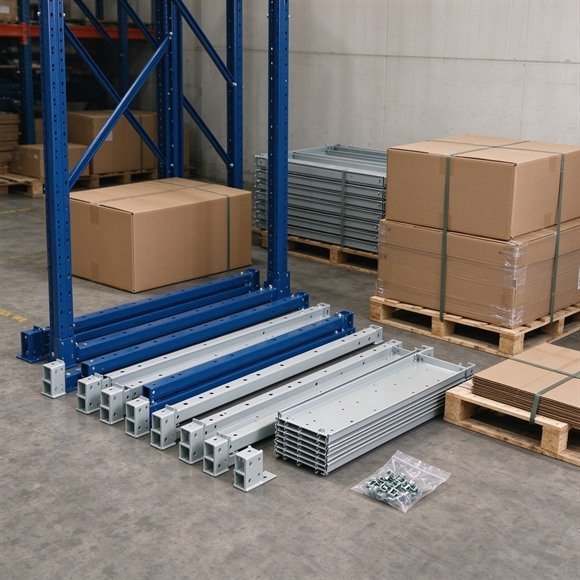
The same unit serves tiny houses, studio apartments, and temporary site accommodation. In these settings the rack is often expected to be portable — moved when the tenant changes or the project relocates. A knock-down boltless rack packs flat for transport and rebuilds quickly on site, which is why remote camps and work-crew accommodation favor it over welded shelving.
A quick note on layout: because a container interior is narrow, place the rack so it does not block the door or force a long reach across the room. A single shallow unit along a side wall, or two units with a gap for access, usually works better than one deep unit that fills the space. If you plan to move the container, keep the rack sections light enough to re-handle and label them by section so reassembly is straightforward.
Common mistakes to avoid
Three problems come up most often. First, buyers order a rack taller than the door or ceiling and then cannot use the top shelf. Second, they size every shelf for the heaviest item, wasting vertical space that a lower heavy zone plus adjustable light shelves would use better. Third, they overlook the floor — a container floor is rarely perfectly level, so skip the leveling feet and the whole unit will rock. Confirm ceiling height, split the load plan into heavy and light zones, and use the adjustable feet, and the rack will serve the room for years.
Why buy from Luoyang Hengna
Luoyang Hengna Office is a steel furniture manufacturer in the Pangcun steel furniture industrial zone, Henan, China. We build boltless shelving in steel with durable powder coating, and we support size and color customization for container and tiny-house projects. Units ship in knock-down form with protective packaging, and export pricing is confirmed per order with a 24-hour quotation response.
Frequently asked questions
Can boltless shelving support the weight of household appliances?
Yes, within its rating. Choose a heavier-duty model for items like washing machines or loaded tool boxes and confirm the per-shelf load in the specification before ordering.
Does a container shelving unit need to be fixed to the wall?
No. A boltless rack is freestanding and holds its shape through the locked shelf fittings. Use the leveling feet to stabilize it on uneven floors.
Will boltless shelving rust inside a humid container?
Quality powder-coated steel resists humidity well in normal conditions. For consistently wet or coastal environments, ask about rust-resistant coating options.
How long does assembly take?
A single person can usually assemble a compact unit in under an hour, depending on the number of shelves and the post height.
Can the rack be disassembled and moved?
Yes. The boltless fittings release by hand, so the unit knocks down flat for relocation and rebuilds without tools.
Get a quote within 24 hours
If you are fitting out a container home, tiny house, or remote camp, contact Luoyang Hengna for a quotation. We respond within 24 hours with pricing, lead time, and shipping options based on your order size and destination.