Shuttle Racking for High Density Storage: Maximize Warehouse Space Efficiency
In today’s fast-paced logistics landscape, maximizing warehouse space while maintaining operational speed is no longer a luxury—it’s a necessity. For businesses grappling…
In today’s fast-paced logistics landscape, maximizing warehouse space while maintaining operational speed is no longer a luxury—it’s a necessity. For businesses grappling with limited storage capacity and the pressure to streamline inventory management, shuttle racking for high density storage emerges as a game-changing solution. This innovative system combines intelligent design with automated technology to transform how goods are stored, retrieved, and managed, making it an indispensable tool for modern warehouses.
What Is Shuttle Racking?
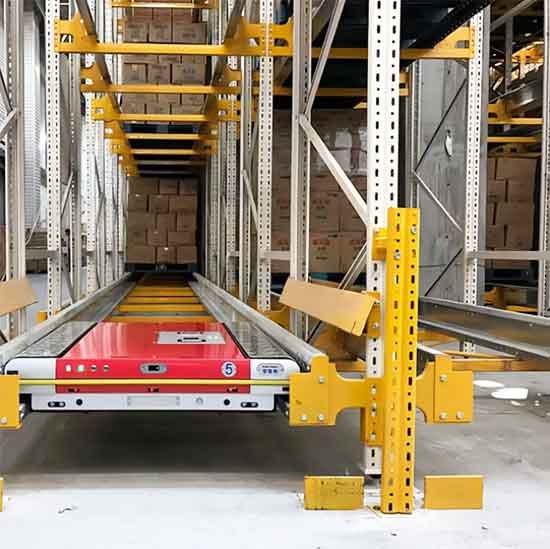
Shuttle racking is a high-density storage system that uses automated shuttle vehicles (also known as shuttle cars) to move pallets within deep storage lanes. Unlike traditional racking systems, which require manual retrieval of goods from the back of shelves, shuttle racking leverages radio-controlled shuttles to transport pallets to the front of the lane for easy access. This eliminates the need for forklifts to enter deep aisles, reducing damage to products and infrastructure while boosting efficiency. The core components include sturdy metal racks, guided rails, and battery-powered shuttle vehicles—each designed to work in harmony to optimize every inch of your warehouse.
How Shuttle Racking Works: A Step-by-Step Breakdown
The magic of shuttle racking lies in its simple yet effective workflow, which streamlines both storing and retrieving goods. Let’s break down the process:
Storing Goods: Precision and Speed
When storing pallets, a forklift operator places the load at the front of the shuttle racking lane, directly onto the guided rails. From there, the operator uses a radio remote to command the shuttle vehicle. The shuttle, equipped with a robust lifting platform and precise positioning sensors, carries the pallet inward along the rails. It moves methodically to the farthest available storage position in the lane, ensuring optimal use of vertical and horizontal space. Once the pallet is securely placed, the shuttle returns to the front, ready for the next load. This process minimizes human error and maximizes storage density—critical for businesses with large inventories.
Retrieving Goods: Effortless Access
Retrieving goods is just as efficient. When an order comes in, the operator sends the shuttle into the lane to locate the desired pallet. Using its sensors, the shuttle identifies the target pallet, lifts it, and transports it smoothly to the front of the lane. The operator then uses a forklift to pick up the pallet and move it to shipping or processing. This “first-in, first-out” (FIFO) or “last-in, first-out” (LIFO) flexibility—depending on your setup—ensures that goods are accessed quickly, whether you prioritize freshness (FIFO for perishables) or space optimization (LIFO for bulk items).
The Heart of the System: Shuttle Vehicles
At the center of shuttle racking is the shuttle vehicle itself—a compact, durable machine powered by rechargeable batteries. These vehicles are engineered to navigate narrow lanes with precision, thanks to their low profile and advanced guidance systems. Key features include:
- Rechargeable Batteries: Ensure continuous operation without frequent stops for refueling.
- Positioning Sensors: Allow the shuttle to accurately locate and handle pallets, even in deep lanes.
- Robust Construction: Built to withstand the rigors of daily warehouse use, with minimal maintenance requirements.
Whether moving heavy pallets or delicate goods, shuttle vehicles deliver reliability and performance, making them the backbone of any high-density storage system.
Design Principles for Optimal Performance
To maximize the benefits of shuttle racking, careful design is essential. Here are the key principles that guide successful implementation:
1. Calculating Rack Depth
The depth of your shuttle racking lanes depends on your operational needs:
- FIFO (First-In, First-Out): Requires deeper lanes to accommodate multiple pallets. The formula is: D = (pallet depth + 50mm) × N + 400mm, where N is the number of pallets per lane.
- LIFO (Last-In, First-Out): Uses shallower lanes for faster access. The formula is: D = (pallet depth + 50mm) × N + 200mm.
These calculations ensure that your racking fits your inventory size while maintaining accessibility.
2. Column Spacing (CE)
Column spacing is critical for forklift maneuverability. The standard formula is: CE = pallet width + 200mm. This provides enough room for forklifts to place and retrieve pallets without damaging the racking or goods.
3. Pallet Compatibility
Not all pallets are created equal. For shuttle racking to function optimally, pallets must meet specific criteria:
- Four-Way Entry: Allows forklifts to access pallets from any direction, simplifying loading and unloading.
- Leg Direction: Pallet legs must be perpendicular to the shuttle track length to ensure stable placement.
If your goods exceed standard pallet dimensions, adjustments can be made—but always prioritize compatibility to avoid operational hiccups.

FIFO vs. LIFO: Choosing the Right Strategy
The choice between FIFO and LIFO depends on your business goals:
FIFO (First-In, First-Out)
Ideal for perishable goods or industries where stock rotation is crucial (e.g., food, pharmaceuticals). With FIFO, the oldest stock is retrieved first, reducing waste and ensuring product freshness. Shuttle racking supports FIFO by allowing shuttles to access the back of the lane easily, making it a top choice for businesses prioritizing quality.
LIFO (Last-In, First-Out)
Best for bulk storage or industries where newer stock is used first (e.g., manufacturing, retail). LIFO saves space by using shallower lanes, but requires careful inventory management to avoid stockouts. Shuttle racking’s flexibility lets you switch between FIFO and LIFO as needed, giving you control over your operations.
Benefits of Shuttle Racking for Your Business
Adopting shuttle racking isn’t just about saving space—it’s about transforming your warehouse into a lean, efficient operation. Here are the top benefits:
1. Maximizes Storage Density
By eliminating the need for wide aisles (since forklifts don’t enter deep lanes), shuttle racking increases storage capacity by up to 50% compared to traditional systems. This is a game-changer for businesses with limited square footage.
2. Boosts Operational Efficiency
Automated retrieval reduces labor costs and speeds up order fulfillment. Shuttles work tirelessly, minimizing downtime and ensuring that goods are moved quickly and accurately. This leads to faster shipping times and happier customers.
3. Reduces Damage and Waste
With forklifts only accessing the front of the lane, there’s less risk of damaging goods or racking. Additionally, FIFO support reduces spoilage for perishable items, cutting down on waste and saving money.
4. Enhances Safety
Fewer forklift movements mean fewer accidents. Shuttle racking creates a safer work environment by limiting human interaction with heavy machinery in tight spaces.
Why Choose Shuttle Racking for High Density Storage?
In a world where efficiency and sustainability are paramount, shuttle racking stands out as a smart investment. It solves the dual challenges of space constraints and operational speed, helping businesses stay competitive in a crowded market. Whether you’re a small warehouse looking to expand or a large distribution center aiming to optimize, shuttle racking delivers results.
Ready to revolutionize your warehouse? Explore our range of shuttle racking solutions and take the first step toward a more efficient, profitable future. With shuttle racking for high density storage, the possibilities are endless.